Plate in the Form of a Chrysanthemum (1700s–1800s): Art, History and Details
Plate in the Form of a Chrysanthemum at the Cleveland Museum of Art: 1700s–1800s, jade. Explore the work's context, creator attribution and collection history.
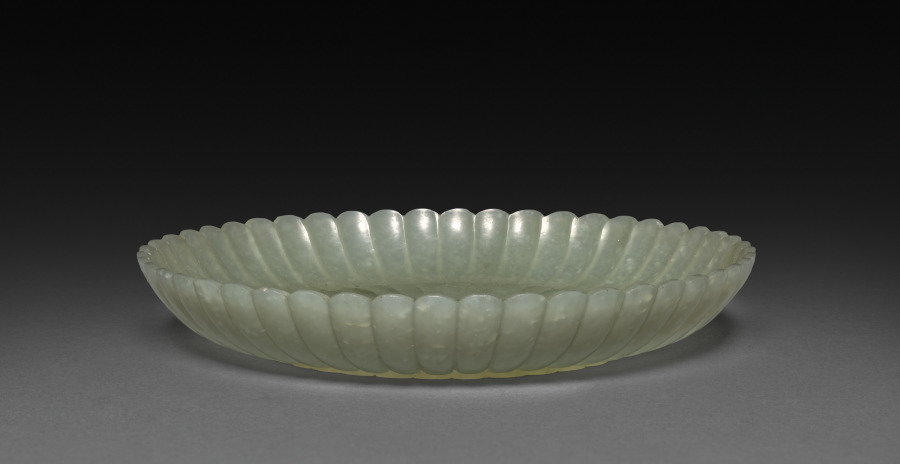
Plate in the Form of a Chrysanthemum (1700s–1800s) is in the Cleveland Museum of Art collection.
The work and its context
The museum's open-access catalogue describes the work:
This light gray-green jade plate is carved on both sides into the shape of an open chrysanthemum. There are three tiers of concave petals and a central rondel of cross-hatched lines to indicate the pistils.
Object facts
- Title: Plate in the Form of a Chrysanthemum
- Date: 1700s–1800s
- Culture: China, Qing dynasty (1644-1911)
- Type: Jade
- Technique: jade
- Dimensions: Diameter: 11.1 cm (4 3/8 in.); Overall: 2 cm (13/16 in.)
- Collection: China - Qing Dynasty
- Department: Chinese Art
- Accession number: 1970.144
Collection credit
Gift of Mrs. John Lyon Collyer in memory of her mother, Mrs. G. M. G. Forman
Further reading listed by the museum
- Lee, Sherman E. “The Year in Review for 1970.” The Bulletin of the Cleveland Museum of Art 58, no. 2 (1971): 22–71.
- Guo li gu gong bo wu yuan 國立故宮博物院. Hai wai yi zhen, Yu qi [海外遺珎, 玉噐 = Chinese art in overseas collections, jade]. Taibei Shi Shilin qu: Guo li gu gong bo wu yuan, 1986.
View the collection record
See the museum's photographs and full catalogue entry. Catalogue text is reproduced from the Cleveland Museum of Art's open-access data, with HTML formatting removed. This object and its supplied image are designated CC0.
Sources
More in Lifestyle
Keep reading