Cosmetic Vessel (c. 1980–1901 BCE): Art, History and Details
Cosmetic Vessel at the Cleveland Museum of Art: c. 1980–1901 BCE, anhydrite. Explore the work's context, creator attribution and collection history.
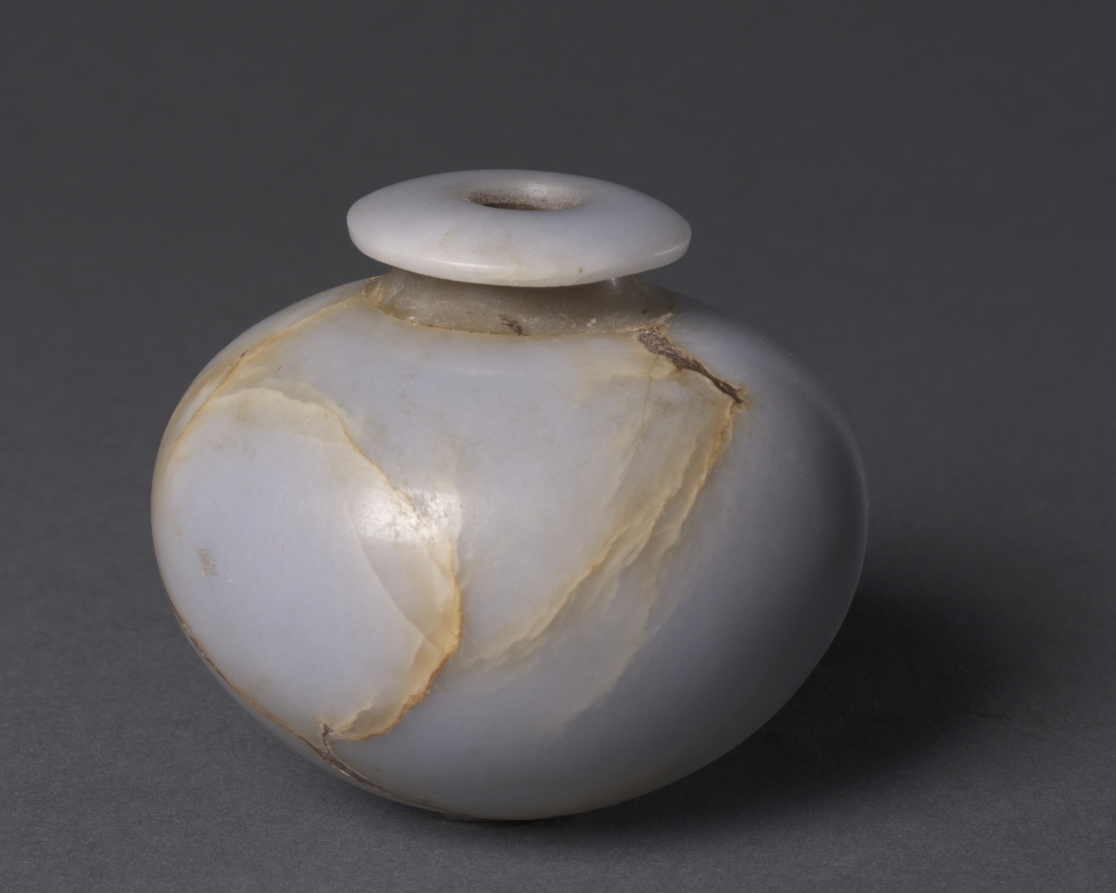
Cosmetic Vessel (c. 1980–1901 BCE) is in the Cleveland Museum of Art collection.
The work and its context
The museum's open-access catalogue describes the work:
Cosmetic vessels would have once contained scented oils or ointments used for beautifying the body, while kohl containers held the eye paint seen in many depictions of ancient Egyptians. Galena, a mineral used in eye paint, helped reflect the sun and repelled insects and tiny organisms that could cause eye disease and blindness. Cosmetics were an essential element of daily life and associated with upholding the ancient Egyptians’ high standards of cleanliness.
Object facts
- Title: Cosmetic Vessel
- Date: c. 1980–1901 BCE
- Culture: Egypt, Middle Kingdom (2040–1648 BCE), Dynasty 12
- Type: Vessels
- Technique: anhydrite
- Dimensions: Diameter: 7 cm (2 3/4 in.); Overall: 6.8 cm (2 11/16 in.)
- Collection: Egypt - Middle Kingdom
- Department: Egyptian and Ancient Near Eastern Art
- Accession number: 1982.3
Collection credit
Edwin R. and Harriet Pelton Perkins Memorial Fund
Further reading listed by the museum
- Lee, Sherman E. “Year in Review for 1982.” The Bulletin of the Cleveland Museum of Art 70, no. 1 (January 1983): 3–55. Published as King's Offering Jar.
- Kozloff, Arielle P. “Egyptian Stone Vessels in Cleveland.” The Bulletin of the Cleveland Museum of Art 73, no. 8 (October 1986): 327–339.
- Berman, Lawrence M., and Kenneth J. Bohač. Catalogue of Egyptian Art: The Cleveland Museum of Art. Cleveland, OH: Cleveland Museum of Art, 1999
View the collection record
See the museum's photographs and full catalogue entry. Catalogue text is reproduced from the Cleveland Museum of Art's open-access data, with HTML formatting removed. This object and its supplied image are designated CC0.
Sources
More in Lifestyle
Keep reading