Plate with Putto, Masques, and Trophies (c. 1530–50): Art, History and Details
Plate with Putto, Masques, and Trophies at the Cleveland Museum of Art: c. 1530–50, tin-glazed earthenware (maiolica). Explore the work's context, creator attribution and collection history.
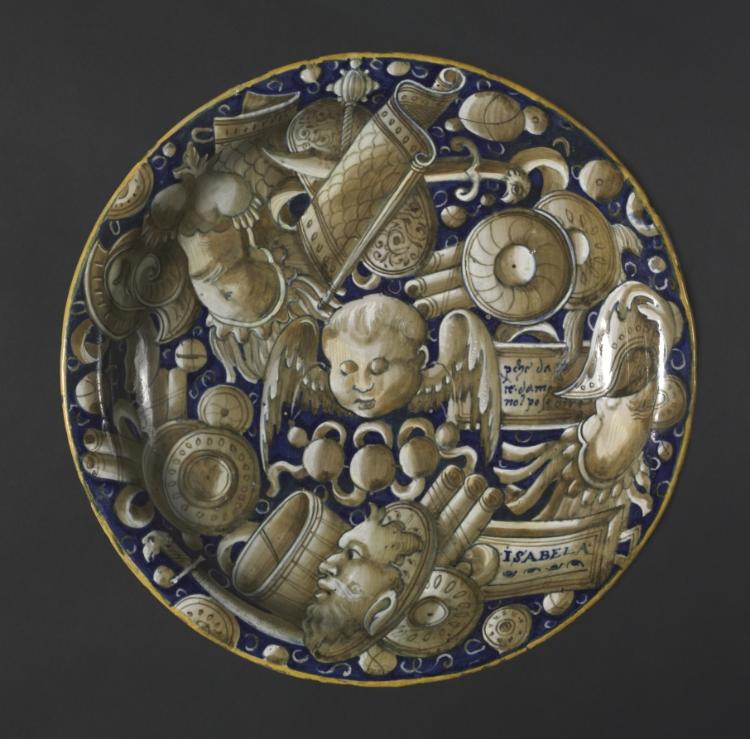
Plate with Putto, Masques, and Trophies (c. 1530–50) is in the Cleveland Museum of Art collection.
The work and its context
The museum's open-access catalogue describes the work:
During the Italian Renaissance of the 1400s and 1500s, nobles and merchants eager to express their wealth and sophistication ordered ceramics for dining, display, and storage. Known as maiolica, because it resembled the brightly colored ceramics from the Mediterranean island of Majorca, these ceramic vessels were covered with a tin glaze that provided an opaque white surface on which colorful decoration and coats of arms as well as mythological or literary stories could be painted.
Object facts
- Title: Plate with Putto, Masques, and Trophies
- Date: c. 1530–50
- Culture: Italy, Urbino
- Type: Ceramic
- Technique: tin-glazed earthenware (maiolica)
- Dimensions: Diameter: 5.6 x 25.7 cm (2 3/16 x 10 1/8 in.)
- Collection: Decorative Arts
- Department: Decorative Art and Design
- Accession number: 1923.1088
A detail from the museum
In combination, the arms, armor, and winged head of a cherub depicted on this plate symbolize war—a common theme in the midst of the Great Wars of Italy (1494–1559).
Collection credit
Gift of M. & R. Stora
Further reading listed by the museum
- No existing citations
View the collection record
See the museum's photographs and full catalogue entry. Catalogue text is reproduced from the Cleveland Museum of Art's open-access data, with HTML formatting removed. This object and its supplied image are designated CC0.
Sources
More in Lifestyle
Keep reading