Pomander (1600s–1700s): Art, History and Details
Pomander at the Cleveland Museum of Art: 1600s–1700s, spherical rock crystal cover with enameled silver mounts. Explore the work's context, creator attribution and collection history.
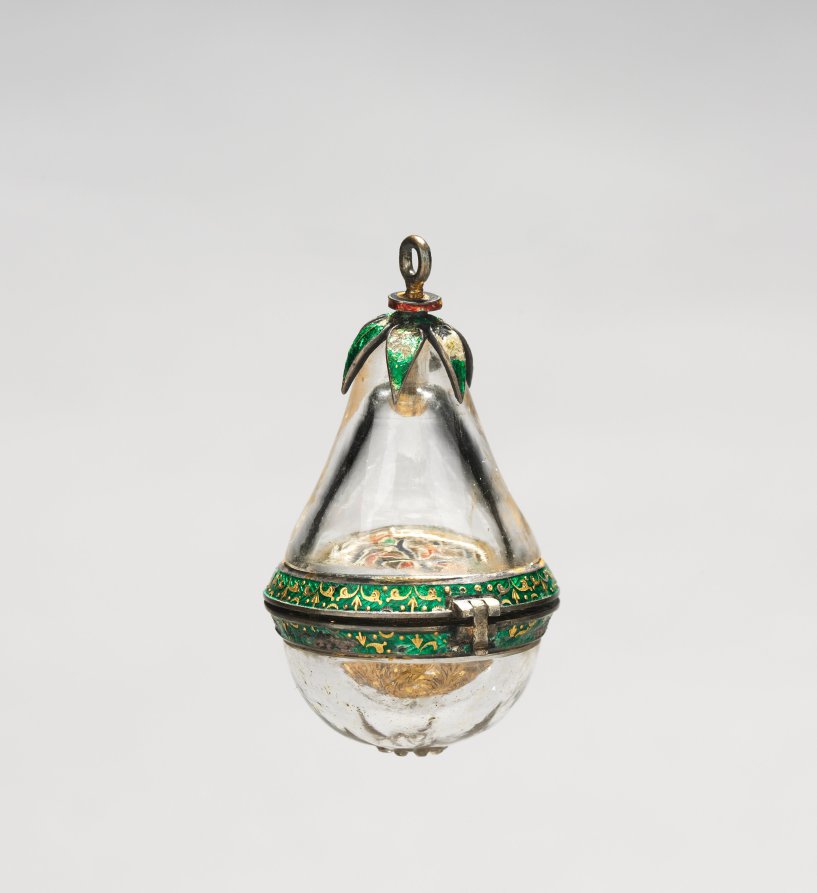
Pomander (1600s–1700s) is in the Cleveland Museum of Art collection.
The work and its context
The museum's open-access catalogue describes the work:
This tiny pear-shaped vial worn tied to a sash would have held scented water or oil. The lid opens to reveal a perforated sprinkler decorated with fine filigree and colorful enamel. A popular scent was attar of roses, made from the essential oil of rose petals.
Object facts
- Title: Pomander
- Date: 1600s–1700s
- Culture: Mughal India
- Type: Container
- Technique: spherical rock crystal cover with enameled silver mounts
- Dimensions: Overall: 4.5 x 3.2 cm (1 3/4 x 1 1/4 in.)
- Collection: Indian Art
- Department: Indian and Southeast Asian Art
- Accession number: 1989.349
A detail from the museum
Rock crystal was a desired, though rare, material for luxury objects at the Mughal court.
Collection credit
Bequest of Mrs. Severance A. Millikin
Further reading listed by the museum
- Catalogue of the Severance and Greta Millikin Collection. Cleveland, OH: Cleveland Museum of Art, 1990.
- Lefèvre, Corinne. Les Arts Moghols, Paris: Citadelles & Mazenod, 2024.
View the collection record
See the museum's photographs and full catalogue entry. Catalogue text is reproduced from the Cleveland Museum of Art's open-access data, with HTML formatting removed. This object and its supplied image are designated CC0.
Sources
More in Lifestyle
Keep reading