Portrait of Emperor Alamgir (Aurangzeb) (c. 1700): Art, History and Details
Portrait of Emperor Alamgir (Aurangzeb) at the Cleveland Museum of Art: c. 1700, Gum tempera and gold on paper. Explore the work's context, creator attribution and collection history.
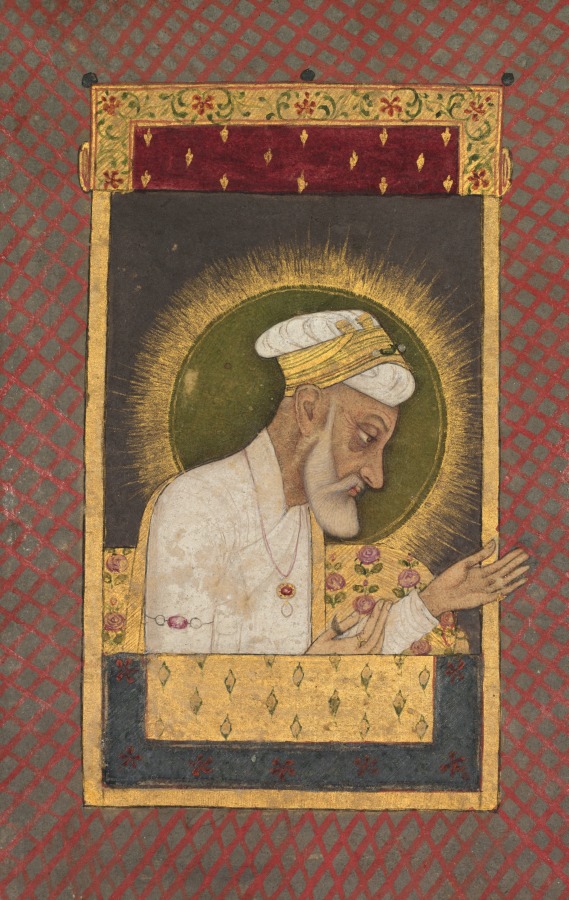
Portrait of Emperor Alamgir (Aurangzeb) (c. 1700) is in the Cleveland Museum of Art collection.
The work and its context
The museum's open-access catalogue describes the work:
Appearing aged and benevolent, the sixth emperor of the Mughal dynasty in India sits at the jharokha window, in the attitude of dispensing favor on his subjects. Marked by a carpet draped over the railing as seen from the exterior of a palace, the jharokha window is where the emperor would come to show himself to the public. His halo indicates that he has divine grace behind him. This small portrait would have been gifted to a loyal supporter by order of the emperor.
Object facts
- Title: Portrait of Emperor Alamgir (Aurangzeb)
- Date: c. 1700
- Culture: Mughal India, Court of Alamgir (reigned 1658–1707)
- Type: Painting
- Technique: Gum tempera and gold on paper
- Dimensions: Sheet: 7.9 x 5.3 cm (3 1/8 x 2 1/16 in.)
- Collection: Indian Art
- Department: Indian and Southeast Asian Art
- Accession number: 1944.498
A detail from the museum
Unlike his predecessors, Alamgir disapproved of alcohol and music.
Collection credit
Purchase from the J. H. Wade Fund
Further reading listed by the museum
- Simon Ray (Gallery). Simon Ray: Indian and Islamic Works of Art. London: Simon Ray, 2017.
View the collection record
See the museum's photographs and full catalogue entry. Catalogue text is reproduced from the Cleveland Museum of Art's open-access data, with HTML formatting removed. This object and its supplied image are designated CC0.
Sources
More in Lifestyle
Keep reading