Pot (1900s): Art, History and Details
Pot at the Cleveland Museum of Art: 1900s, Terracotta. Explore the work's context, creator attribution and collection history.
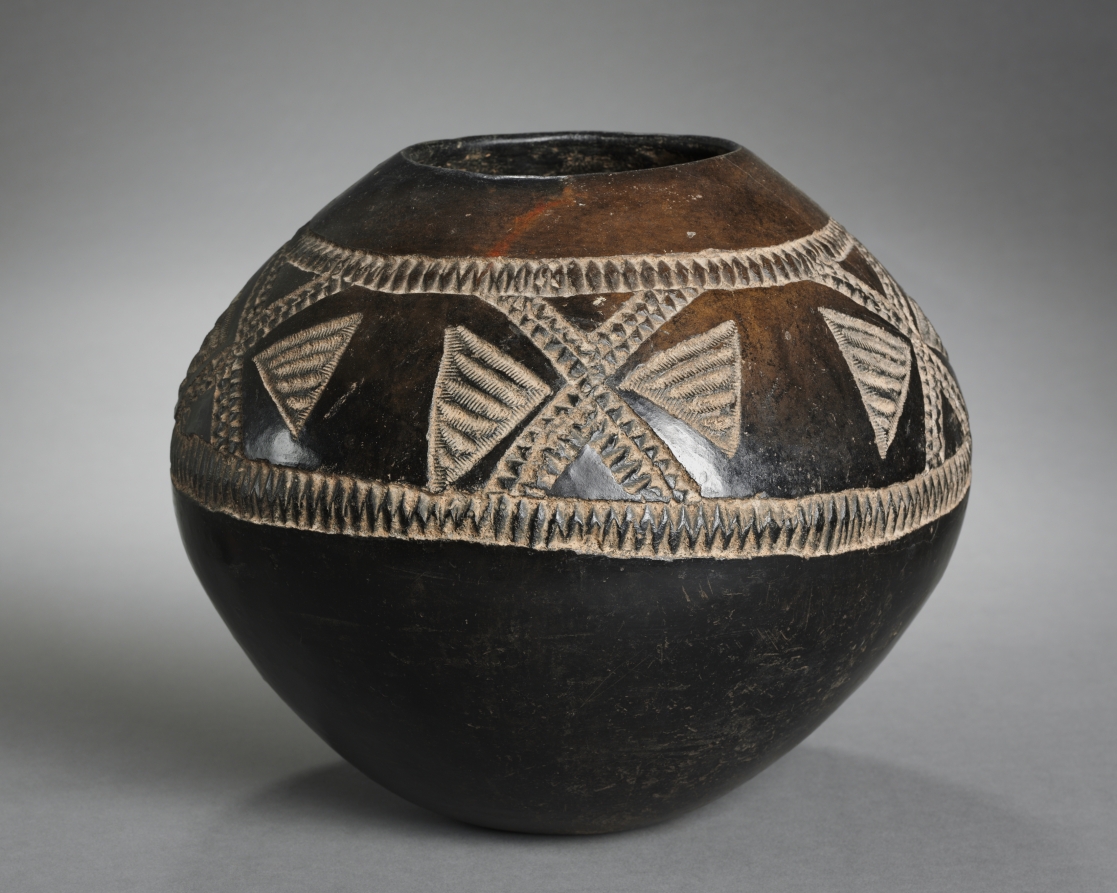
Pot (1900s) is in the Cleveland Museum of Art collection.
The work and its context
The museum's open-access catalogue describes the work:
Within the Zulu culture (the Northern Nguni tribe), the making of beer pots is the traditional function of women. A potter will travel far searching in riverbeds or for anthills that can supply the correct clay for the vessels. Formed using the coil technique and smoothed using flattened stones, the pots are fired in a dug-out earthen "kiln," and covered with palm leaves, whose oil results in the blackened, shiny texture of the vessels. Years of use deepen this texture to a rich woody patina.
Object facts
- Title: Pot
- Date: 1900s
- Culture: Southern Africa, South Africa, Zulu-style potter
- Type: Vessels
- Technique: Terracotta
- Dimensions: Overall: 26.7 x 25.4 cm (10 1/2 x 10 in.)
- Collection: African Art
- Department: African Art
- Accession number: 1999.192
Collection credit
Gift of Bernie and Sue Pucker in memory of Robert P. Bergman
Further reading listed by the museum
- Cleveland Museum of Art, “Mrs. Paul Wurzburger Donates Major Calder Mobile to Cleveland Museum of Art, Korean Painting, Japanese Ceramic, Italian Drawing and other Works Acquired” September 8, 1999, Cleveland Museum of Art Archives.
- Smith, Fred T., Judith Perani, Joseph L. Underwood, and Martha J. Ehrlich. The Visual Arts of Africa : Gender, Power, and Life Cycle Rituals. Second edition. New York: Oxford University Press, 2022.
View the collection record
See the museum's photographs and full catalogue entry. Catalogue text is reproduced from the Cleveland Museum of Art's open-access data, with HTML formatting removed. This object and its supplied image are designated CC0.
Sources
More in Lifestyle
Keep reading