Power figure (nkisi) (late 1800s-early 1900s): Art, History and Details
Power figure (nkisi) at the Cleveland Museum of Art: late 1800s-early 1900s, Wood, organic materials (including resin), iron, reed, tooth, seashell or glass beads, and possibly plastic. Explore the work's context, creator attribution and co
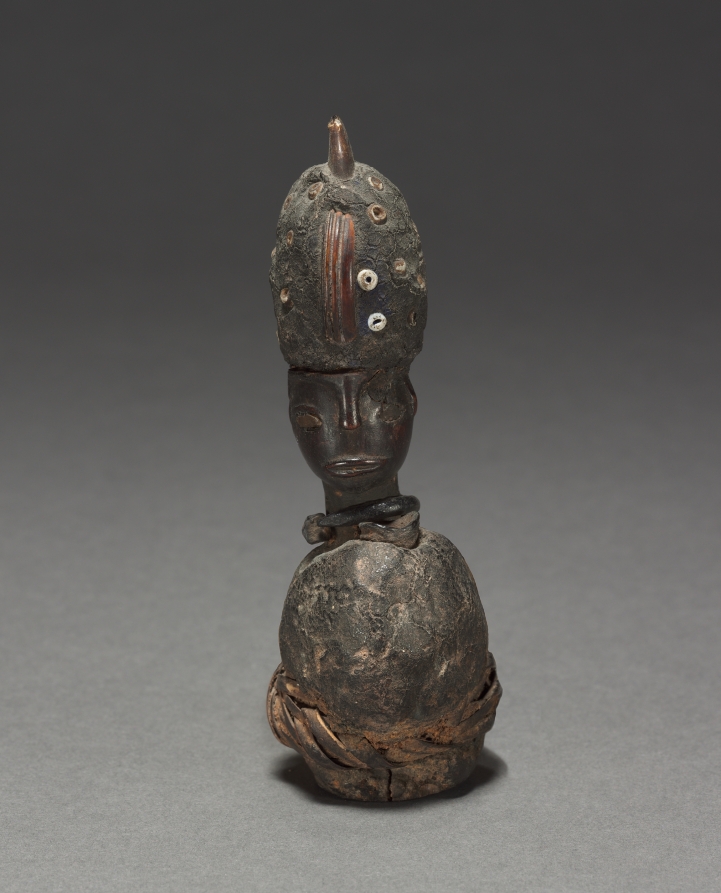
Power figure (nkisi) (late 1800s-early 1900s) is in the Cleveland Museum of Art collection.
The work and its context
The museum's open-access catalogue describes the work:
One of seven anthropomorphic figurines, these minkisi contained medicines in which an ancestral spirit was believed to reside. Minkisi were objects of communal use; if conflict arose between two citizens, the Nkisi figure, along with the nganga (ritual leader) helped resolve the dispute. This small figure belonged to “the sorcerer of Loango,” chief of all sorcerers of that region (a province and port in West Central Africa).
Object facts
- Title: Power figure (nkisi)
- Date: late 1800s-early 1900s
- Culture: Central Africa, Republic of the Congo, Kongo people
- Type: Sculpture
- Technique: Wood, organic materials (including resin), iron, reed, tooth, seashell or glass beads, and possibly plastic
- Dimensions: Overall: 12 x 4 x 4 cm (4 3/4 x 1 9/16 x 1 9/16 in.)
- Collection: African Art
- Department: African Art
- Accession number: 2010.442
Collection credit
René and Odette Delenne Collection, Leonard C. Hanna Jr. Fund
Further reading listed by the museum
- Petridis, Constantine. "René and Odette Delenne," in Tribal Art vol. XV-4, no. 61 (Autumn 2011): pps. 118-124, p. 121, fig. 6.
- Petridis, Constantine, et al. Fragments of the Invisible: The René and Odette Delenne Collection of Congo Sculpture. Cleveland, OH: Cleveland Museum of Art. Milan: 5 Continents Editions, 2013, 54-58.
View the collection record
See the museum's photographs and full catalogue entry. Catalogue text is reproduced from the Cleveland Museum of Art's open-access data, with HTML formatting removed. This object and its supplied image are designated CC0.
Sources
More in Lifestyle
Keep reading