Priest, France (c. 1840s–50s): Art, History and Details
Priest, France at the Cleveland Museum of Art: c. 1840s–50s, daguerreotype, half-plate. Explore the work's context, creator attribution and collection history.
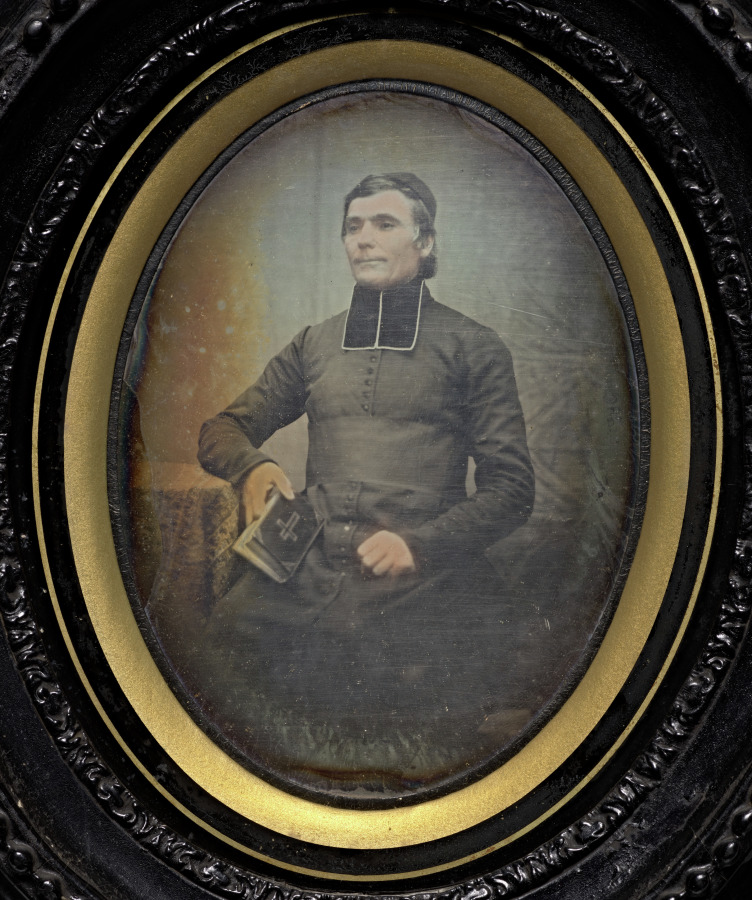
Priest, France (c. 1840s–50s) is in the Cleveland Museum of Art collection.
The work and its context
The museum's open-access catalogue describes the work:
The daguerreotype was the first publicly available photographic process. It was in use from 1839 into the 1850s and especially favored for portraits. The daguerreotype’s mirrorlike surface offered incredible clarity and detail but the process only produced a unique image. It did not allow multiple copies to be produced.
Object facts
- Title: Priest, France
- Date: c. 1840s–50s
- Culture: France
- Type: Photograph
- Technique: daguerreotype, half-plate
- Dimensions: Overall: 16 x 12 cm (6 5/16 x 4 3/4 in.)
- Collection: PH - French 19th Century
- Department: Photography
- Accession number: 2021.76
Collection credit
Gift of Michael Mattis and Judith Hochberg
View the collection record
See the museum's photographs and full catalogue entry. Catalogue text is reproduced from the Cleveland Museum of Art's open-access data, with HTML formatting removed. This object and its supplied image are designated CC0.
Sources
More in Lifestyle
Keep reading