Prince Amar Singh (1672–1710) Drives His Own Elephant (c. 1695): Art, History and Details
Prince Amar Singh (1672–1710) Drives His Own Elephant at the Cleveland Museum of Art: c. 1695, gum tempera and gold on paper. Explore the work's context, creator attribution and collection history.
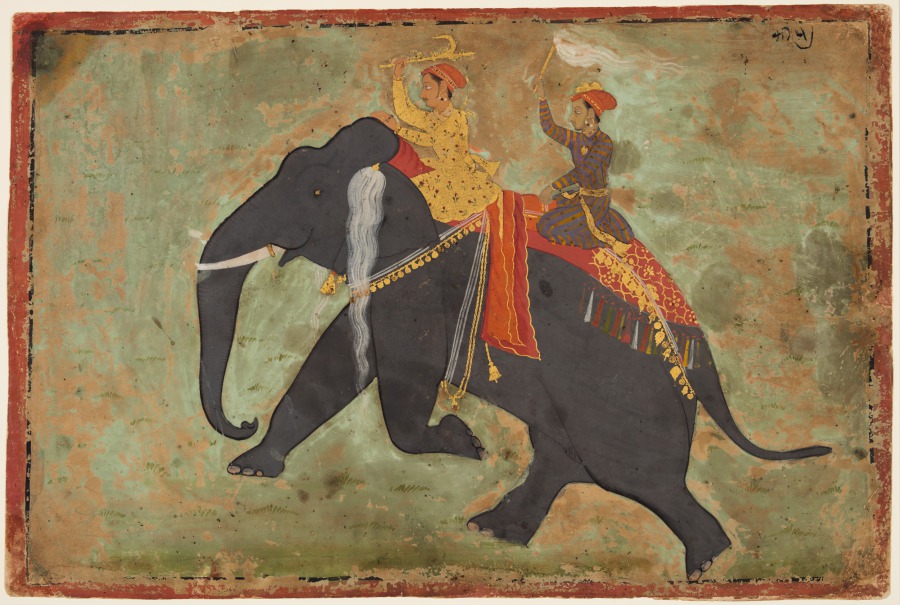
Prince Amar Singh (1672–1710) Drives His Own Elephant (c. 1695) is in the Cleveland Museum of Art collection. The museum's creator attribution is Mewar Stipple Master (Indian).
The work and its context
The museum's open-access catalogue describes the work:
A youthful prince clad in yellow jama (belted tunic) holds a goad in his hand to control his elephant. His attendant sits in the back holding the royal insignia, a flying whisk, which billows in response to the velocity with which the elephant is running. The background of the painting is monochromatic green, a highly corrosive pigment.
Object facts
- Title: Prince Amar Singh (1672–1710) Drives His Own Elephant
- Date: c. 1695
- Creator attribution: Mewar Stipple Master (Indian)
- Culture: Northwestern India, Rajasthan, Rajput Kingdom of Mewar
- Type: Painting
- Technique: gum tempera and gold on paper
- Dimensions: Page: 26.8 x 40 cm (10 9/16 x 15 3/4 in.)
- Collection: Indian Art
- Department: Indian and Southeast Asian Art
- Accession number: 2018.140
A detail from the museum
The tusk of the elephant is decorated with a gold ring.
Collection credit
Purchase and partial gift from the Catherine and Ralph Benkaim Collection; Severance and Greta Millikin Purchase Fund
View the collection record
See the museum's photographs and full catalogue entry. Catalogue text is reproduced from the Cleveland Museum of Art's open-access data, with HTML formatting removed. This object and its supplied image are designated CC0.
Sources
More in Lifestyle
Keep reading