Qur'an Manuscript Folio (Recto); Illuminated Page (1500s): Art, History and Details
Qur'an Manuscript Folio (Recto); Illuminated Page at the Cleveland Museum of Art: 1500s, ink, gold, and colors on paper. Explore the work's context, creator attribution and collection history.
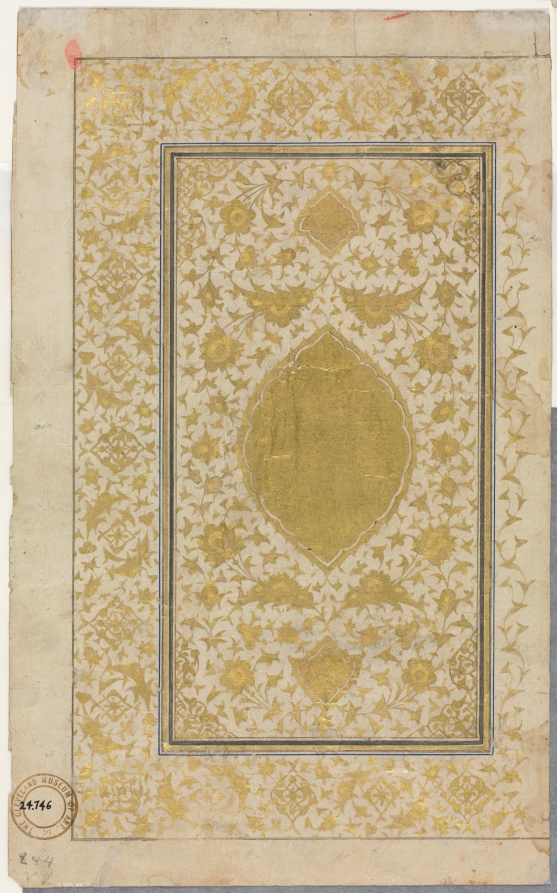
Qur'an Manuscript Folio (Recto); Illuminated Page (1500s) is in the Cleveland Museum of Art collection.
The work and its context
The museum's open-access catalogue describes the work:
The Qur'an is the sacred book of Islam. In the view of orthodox Muslims, it is the literal word of God as revealed to the Prophet Muhammad (d. 632) in the Arabic language, and thus, recorded in the Arabic script. Because of its association with the divine word, Arabic calligraphy came to be a supreme art form in the Islamic world. As the quintessential symbol of the culture, it became a pervasive decorative element in Islamic art and architecture. Although secondary to calligraphy, a tradition of illumination—that is, ornamentation with colors and gold—developed to enhance the pages of the Qur'an. Because of the prestige associated with the book arts in the Islamic world, the decorative motifs employed by illuminators (scrolling vines, blossoms, lozenges, and cartouches) found their way into other art forms, for example, metalwork, textiles, and carpets.
Object facts
- Title: Qur'an Manuscript Folio (Recto); Illuminated Page
- Date: 1500s
- Culture: Afghanistan, Herat, Safavid period (1501–1722)
- Type: Manuscript
- Technique: ink, gold, and colors on paper
- Dimensions: Sheet: 49 x 36.3 cm (19 5/16 x 14 5/16 in.)
- Collection: Islamic Art
- Department: Islamic Art
- Accession number: 1924.746.1.a
Collection credit
Purchase from the J. H. Wade Fund
Further reading listed by the museum
- Sims, Lowery Stokes. The persistence of geometry: form, content, and culture in the collection of the Cleveland Museum of Art. Cleveland, OH: The Cleveland Museum of Art, 2006.
View the collection record
See the museum's photographs and full catalogue entry. Catalogue text is reproduced from the Cleveland Museum of Art's open-access data, with HTML formatting removed. This object and its supplied image are designated CC0.
Sources
More in Lifestyle
Keep reading