Rabindranath Tagore (1920): Art, History and Details
Rabindranath Tagore at the Cleveland Museum of Art: 1920, drypoint. Explore the work's context, creator attribution and collection history.
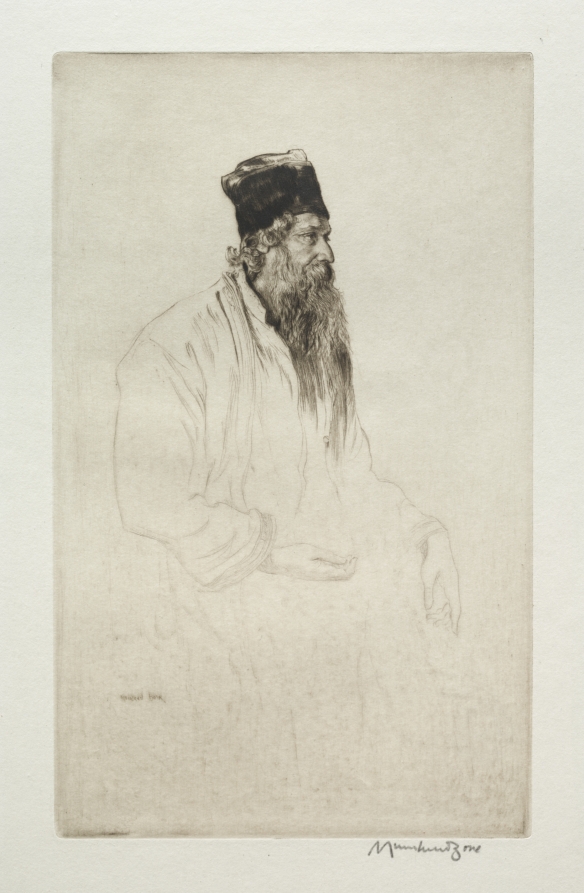
Rabindranath Tagore (1920) is in the Cleveland Museum of Art collection. The museum's creator attribution is Muirhead Bone (British, 1876–1953).
The work and its context
The museum's open-access catalogue describes the work:
Poet laureate and first Asian recipient of the Nobel Prize in literature, Tagore (1861–1941) was a leader of the nonviolent movement to free India from British rule. The artist has rendered Tagore’s face with penetrating realism and luxurious textures. In contrast, his body is left as a sketch, giving him an ethereal quality; his hand positions are evocative of the mudras, or symbolic gestures, of Indian holy men or divinities. This portrait was probably made during Tagore’s 1920 visit to London from India to seek support for his new university in Bengal. For Tagore, however, the trip was overshadowed by his observation of British indifference to the 1919 massacre of hundreds of unarmed Indians in the Punjab by colonial forces. Tagore relinquished his knighthood and redoubled his efforts to lead India to independence.
Object facts
- Title: Rabindranath Tagore
- Date: 1920
- Creator attribution: Muirhead Bone (British, 1876–1953)
- Culture: England, 20th century
- Type: Print
- Technique: drypoint
- Collection: PR - Drypoint
- Department: Prints
- Accession number: 1940.835
Collection credit
Bequest of James Parmelee
View the collection record
See the museum's photographs and full catalogue entry. Catalogue text is reproduced from the Cleveland Museum of Art's open-access data, with HTML formatting removed. This object and its supplied image are designated CC0.
Sources
More in Lifestyle
Keep reading