Ring (1700s): Art, History and Details
Ring at the Cleveland Museum of Art: 1700s, Gold, colored glass, and enamel. Explore the work's context, creator attribution and collection history.
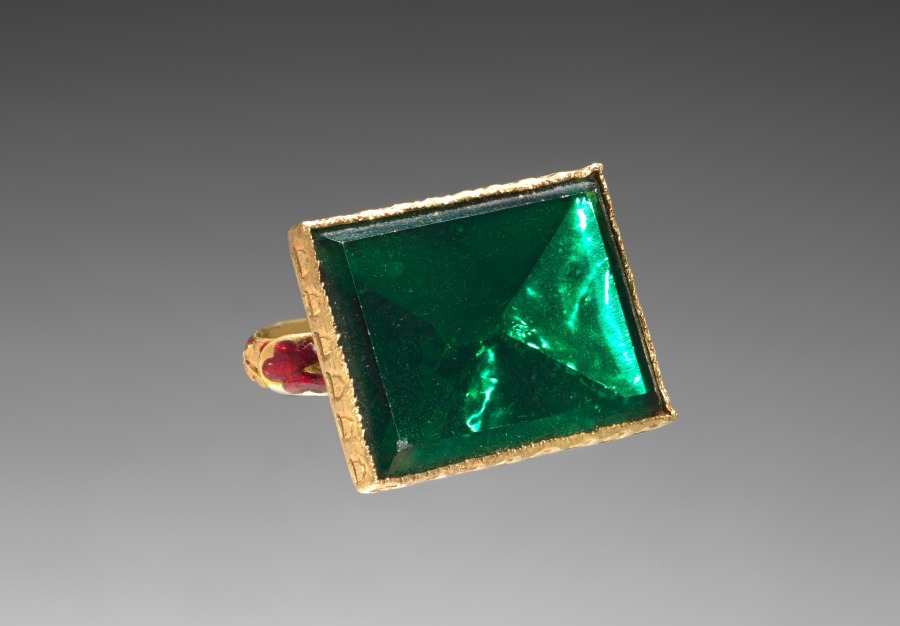
Ring (1700s) is in the Cleveland Museum of Art collection.
The work and its context
The museum's open-access catalogue describes the work:
This ring is made from gold and colored glass, which is an imitation of emerald. Emeralds were extremely popular at the Mughal court, and were imported from Colombia. Emperor Akbar’s (reigned 1565–1605) court chronicler Abu’l Fazl recorded emeralds as one of the major holdings of the Mughal treasury, and there are several mentions of emeralds in the records of the reigns of Emeperor Jahangir (reigned 1605–27) and Emperor Shah Jahan (reigned 1628–58). Following the Afsharid invasion of Delhi in 1739, the jewels of the Mughal treasury were seized along with precious illustrated books and albums of paintings. In imitation of the jewels that once graced members of the Mughal court, jewelers created spectacular pieces from colored glass and fine-quality enamel. The city of Jaipur in northwestern India was famed for its enamel and jewelry making.
Object facts
- Title: Ring
- Date: 1700s
- Culture: India, Mughal, 18th century
- Type: Jewelry
- Technique: Gold, colored glass, and enamel
- Dimensions: Diameter: 2.3 cm (7/8 in.)
- Collection: Indian Art
- Department: Indian and Southeast Asian Art
- Accession number: 1944.69
Collection credit
Edward L. Whittemore Fund
View the collection record
See the museum's photographs and full catalogue entry. Catalogue text is reproduced from the Cleveland Museum of Art's open-access data, with HTML formatting removed. This object and its supplied image are designated CC0.
Sources
More in Lifestyle
Keep reading