Saint Elizabeth of Hungary (c. 1515): Art, History and Details
Saint Elizabeth of Hungary at the Cleveland Museum of Art: c. 1515, lindenwood with polychromy and gilding. Explore the work's context, creator attribution and collection history.
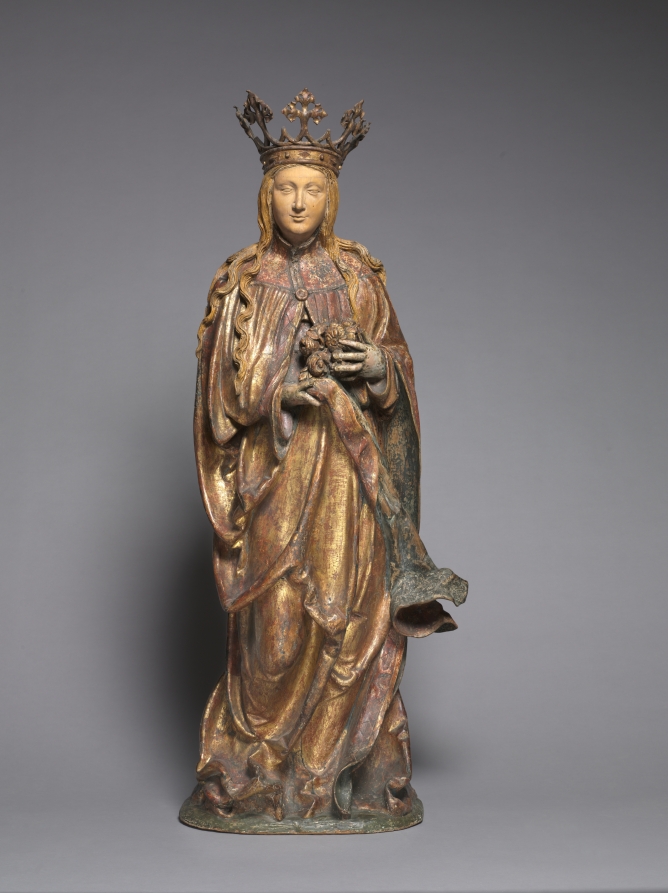
Saint Elizabeth of Hungary (c. 1515) is in the Cleveland Museum of Art collection. The museum's creator attribution is Mätthaus Kreniss (German).
The work and its context
The museum's open-access catalogue describes the work:
Saint Elizabeth was born in 1207, the daughter of Andreas II, King of Hungary; her crown alludes to her royal birth. Many legends about her generosity and work on behalf of the poor were circulated in the Middle Ages, among them the subject of this sculpture: food she was carrying to the poor was miraculously changed to roses to avoid discovery by her husband. Much of the original paint and gilding is preserved on this sculpture except the face, which had been stripped and repainted in heavy oils prior to its acquisition by the museum. This modern paint has been removed.
Object facts
- Title: Saint Elizabeth of Hungary
- Date: c. 1515
- Creator attribution: Mätthaus Kreniss (German)
- Culture: Germany, Bavaria, 16th century
- Type: Sculpture
- Technique: lindenwood with polychromy and gilding
- Dimensions: Overall: 131.8 x 53.3 x 28.3 cm (51 7/8 x 21 x 11 1/8 in.)
- Collection: MED - Gothic
- Department: Medieval Art
- Accession number: 1971.274
Collection credit
Gift of Mrs. Carol L. Brewster
View the collection record
See the museum's photographs and full catalogue entry. Catalogue text is reproduced from the Cleveland Museum of Art's open-access data, with HTML formatting removed. This object and its supplied image are designated CC0.
Sources
More in Lifestyle
Keep reading