Saint George and the Dragon (late 1600s): Art, History and Details
Saint George and the Dragon at the Cleveland Museum of Art: late 1600s, painted and gilded wood. Explore the work's context, creator attribution and collection history.
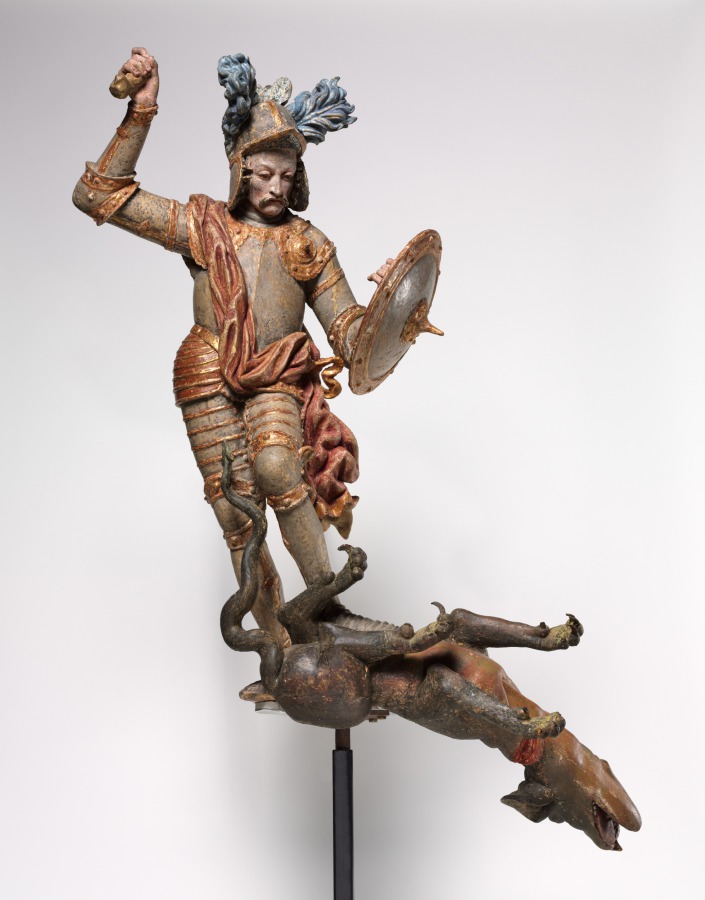
Saint George and the Dragon (late 1600s) is in the Cleveland Museum of Art collection.
The work and its context
The museum's open-access catalogue describes the work:
Saint George, a Roman soldier martyred for his Christian faith, is best known for slaying a fearsome dragon that terrorized the city of Silene, in Libya. George offered to kill the monster if residents of the city convert to Christianity. Here, George stands triumphantly over the dragon, writhing as it dies. The artist deliberately incorporated features intended to make his figure seem more familiar: the dragon seems more canine than reptilian, while George wears armor from the recent past and bears almost portrait-like facial features.
Object facts
- Title: Saint George and the Dragon
- Date: late 1600s
- Culture: South Germany or Austria, late 17th century
- Type: Sculpture
- Technique: painted and gilded wood
- Dimensions: Overall: 100.9 x 75.5 x 29 cm (39 3/4 x 29 3/4 x 11 7/16 in.)
- Collection: Sculpture
- Department: European Painting and Sculpture
- Accession number: 1959.341
Collection credit
Gift of Mr. and Mrs. Severance A. Millikin
Further reading listed by the museum
- "Year in Review 1960" The Bulletin of The Cleveland Museum of Art XLVII, no. 10 (December, 1960): 244.
- "Accessions of American and Canadian Museums, October-December 1960." The Art Quarterly XXIV, no. 1 (Spring 1961): 92-105.
- Ditner, David Charles. Seventeenth and Eighteenth Century European Sculpture in the Cleveland Museum of Art. Thesis Ph.D. Case Western Reserve University 1986.
View the collection record
See the museum's photographs and full catalogue entry. Catalogue text is reproduced from the Cleveland Museum of Art's open-access data, with HTML formatting removed. This object and its supplied image are designated CC0.
Sources
More in Lifestyle
Keep reading