Saltillo Sarape (c. 1840–60): Art, History and Details
Saltillo Sarape at the Cleveland Museum of Art: c. 1840–60, Wool, cotton; tapestry weave, macramé fringe. Explore the work's context, creator attribution and collection history.
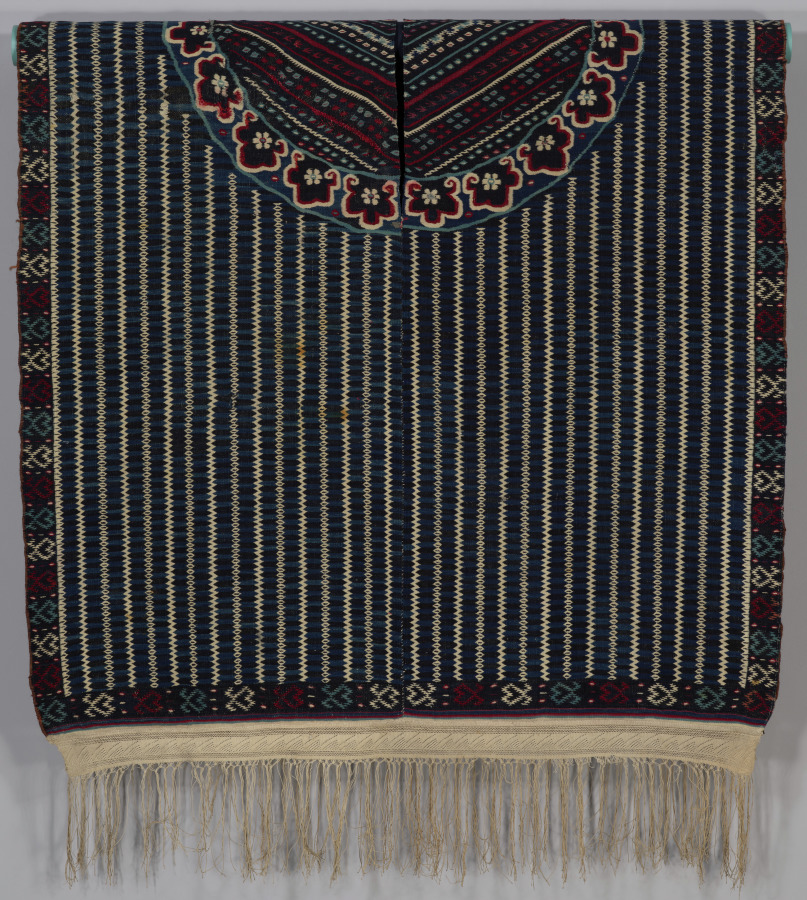
Saltillo Sarape (c. 1840–60) is in the Cleveland Museum of Art collection.
The work and its context
The museum's open-access catalogue describes the work:
The sarape (wearing blanket) is a classic Mexican men’s garment that became a symbol of national identity and pride after Mexico achieved independence from Spain in 1821. Examples woven between about 1750 and 1875 in Saltillo, a town in northern Mexico, are the sarape’s most famous representatives, prized for their design, color, and technical refinement.
Object facts
- Title: Saltillo Sarape
- Date: c. 1840–60
- Culture: Mexico, Coahuila state, Saltillo Region
- Type: Textile
- Technique: Wool, cotton; tapestry weave, macramé fringe
- Dimensions: Overall: 200.7 x 106.7 cm (79 x 42 in.)
- Collection: T - Native North American
- Department: Textiles
- Accession number: 1921.568
A detail from the museum
Saltillo sarapes (wearing blankets) are prized for their design, color, and technical refinement.
Collection credit
Gift of J. H. Wade
View the collection record
See the museum's photographs and full catalogue entry. Catalogue text is reproduced from the Cleveland Museum of Art's open-access data, with HTML formatting removed. This object and its supplied image are designated CC0.
Sources
More in Lifestyle
Keep reading