Saucer (Soucoupe) (1753–54): Art, History and Details
Saucer (Soucoupe) at the Cleveland Museum of Art: 1753–54, Soft-paste porcelain with enamel and gilt decoration. Explore the work's context, creator attribution and collection history.
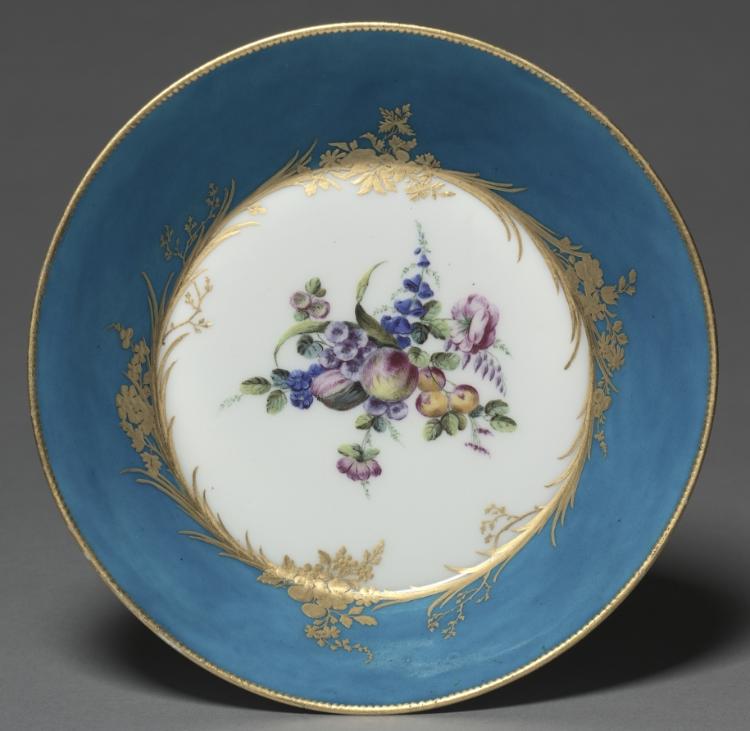
Saucer (Soucoupe) (1753–54) is in the Cleveland Museum of Art collection. The museum's creator attribution is Vincennes Porcelain Factory (France, 1740–56).
The work and its context
The museum's open-access catalogue describes the work:
The rich turquoise ground of this plate was known as bleu céleste (celestial blue) and introduced at the Vincennes factory in 1753. The deep color was achieved by repeated applications of the powdered pigment and multiple firings, which made it difficult for factories to achieve a smooth, even-toned color. Objects decorated with this color through this complicated process were among the most expensive items produced.
Object facts
- Title: Saucer (Soucoupe)
- Date: 1753–54
- Creator attribution: Vincennes Porcelain Factory (France, 1740–56)
- Culture: France, Vincennes
- Type: Ceramic
- Technique: Soft-paste porcelain with enamel and gilt decoration
- Dimensions: Diameter: 4.7 x 19.4 cm (1 7/8 x 7 5/8 in.)
- Collection: Decorative Arts
- Department: Decorative Art and Design
- Accession number: 1989.188
A detail from the museum
This color was famously used on a 1,749-piece dinner service made for the French king Louis XV in 1753.
Collection credit
Bequest of Mrs. Severance A. Millikin
Further reading listed by the museum
- Hawley, Henry. "European Porcelain: The Millikin Collection." The Bulletin of the Cleveland Museum of Art 80, no. 1 (1993): 3-35.
View the collection record
See the museum's photographs and full catalogue entry. Catalogue text is reproduced from the Cleveland Museum of Art's open-access data, with HTML formatting removed. This object and its supplied image are designated CC0.
Sources
More in Lifestyle
Keep reading