Scabbard (1800s): Art, History and Details
Scabbard at the Cleveland Museum of Art: 1800s, Wood with rattan strips. Explore the work's context, creator attribution and collection history.
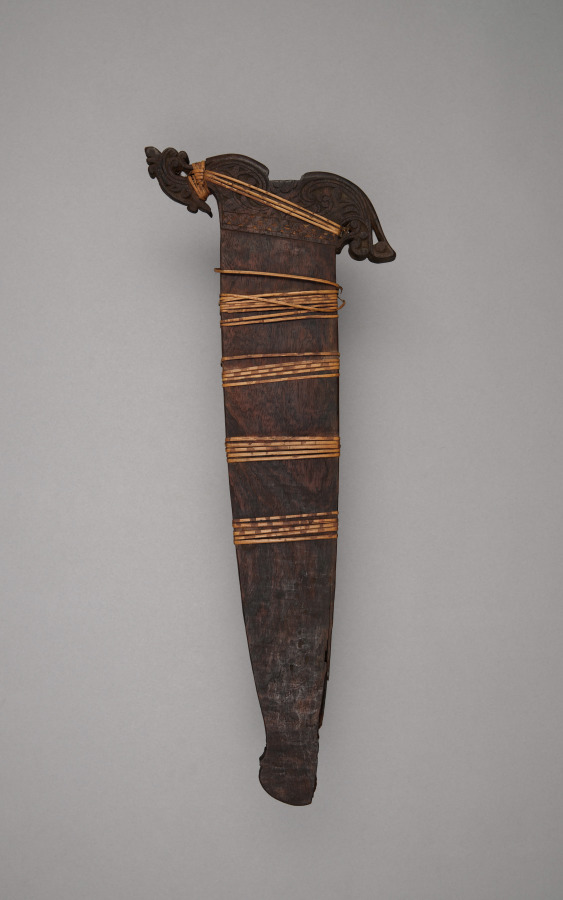
Scabbard (1800s) is in the Cleveland Museum of Art collection.
The work and its context
The museum's open-access catalogue describes the work:
The flared form of this wooden scabbard indicates that it was made to house a barong blade that would have belonged to members of a Muslim group in the southern Philippines, the Maranau, Tausug, or Yakan. The upper section features incised scroll-like motifs, similar to the stylized floriate designs common in southern Philippine okir carving traditions. Several bands of rattan lashings reinforce the sheath, adding both structural stability and decorative rhythm.
Object facts
- Title: Scabbard
- Date: 1800s
- Culture: Philippines, Mindanao
- Type: Arms and Armor
- Technique: Wood with rattan strips
- Dimensions: Overall: 44.8 cm (17 5/8 in.)
- Collection: Oceanic Art
- Department: Oceania
- Accession number: 1916.768
A detail from the museum
The scrolling motifs traveled with Islamic people by way of maritime trade.
Collection credit
Gift of J. H. Wade
View the collection record
See the museum's photographs and full catalogue entry. Catalogue text is reproduced from the Cleveland Museum of Art's open-access data, with HTML formatting removed. This object and its supplied image are designated CC0.
Sources
More in Lifestyle
Keep reading


