Shamvara (c. 1100): Art, History and Details
Shamvara at the Cleveland Museum of Art: c. 1100, bronze. Explore the work's context, creator attribution and collection history.
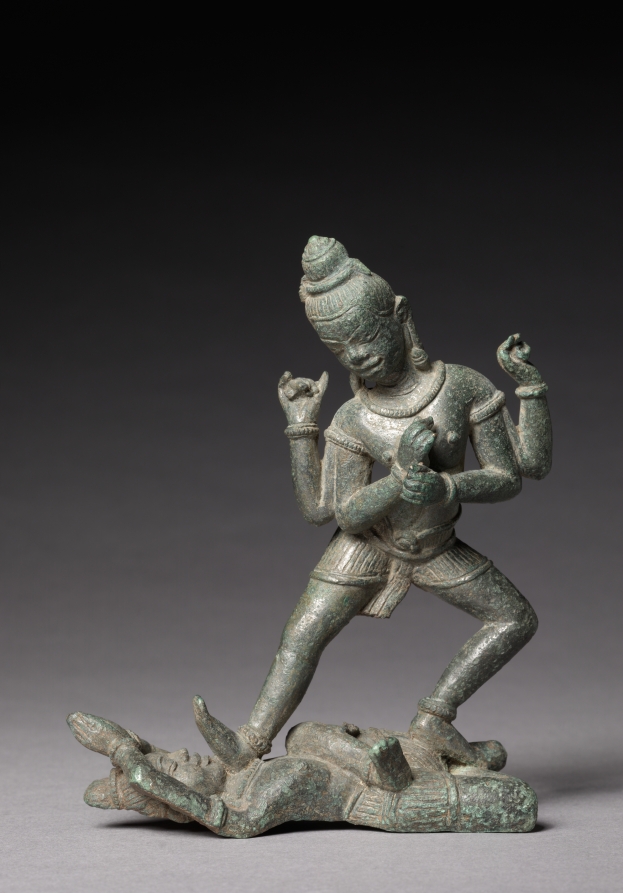
Shamvara (c. 1100) is in the Cleveland Museum of Art collection.
The work and its context
The museum's open-access catalogue describes the work:
An extremely rare bronze of a tantric Buddhist deity depicts the trampling of the personifications of the afflictions that keep beings cycling around the world of samsara, moving from one unhappy birth, death, and rebirth to another. This male figure, a prominent form of a tantric Buddha in Tibetan Buddhism, is four-armed and probably once held a vajra and bell in his crossed hands.
Object facts
- Title: Shamvara
- Date: c. 1100
- Culture: Cambodia, Angkor, 11th century
- Type: Sculpture
- Technique: bronze
- Dimensions: Overall: 14.8 cm (5 13/16 in.)
- Collection: Cambodian Art
- Department: Indian and Southeast Asian Art
- Accession number: 1985.92.1
Collection credit
Leonard C. Hanna Jr. Fund
Further reading listed by the museum
- Octagon, Spink & Son Ltd. vol XXII.2, June 1985.
- Turner, Evan H. “The Year in Review for 1985.” The Bulletin of the Cleveland Museum of Art 73, no. 2 (February 1986): 26–71.
- Bunker, Emma C., and Douglas Latchford. Adoration and Glory: The Golden Age of Khmer Art. Chicago: Art Media Resources, 2004.
View the collection record
See the museum's photographs and full catalogue entry. Catalogue text is reproduced from the Cleveland Museum of Art's open-access data, with HTML formatting removed. This object and its supplied image are designated CC0.
Sources
More in Lifestyle
Keep reading