Shiva Bearing Aloft the Body of His Sati (c. 1890): Art, History and Details
Shiva Bearing Aloft the Body of His Sati at the Cleveland Museum of Art: c. 1890, Gum tempera, graphite, ink, and tin on paper. Explore the work's context, creator attribution and collection history.
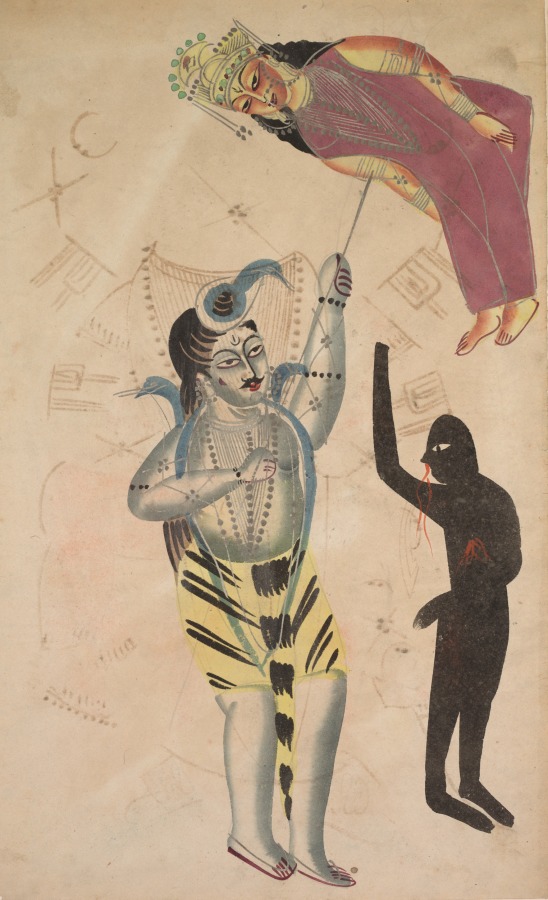
Shiva Bearing Aloft the Body of His Sati (c. 1890) is in the Cleveland Museum of Art collection.
The work and its context
The museum's open-access catalogue describes the work:
This unusual image portrays Shiva holding aloft the corpse of his wife Sati with his trident. Sati immolated herself because of the hostility directed toward her husband Shiva by her father Daksha. The shadowy figure with blood emerging from the nose and heart is reminiscent of images of death (mrtu pat) found among the magic painter-minstrels (jada patua) of the Santal tribals of Bihar. The shadow is missing its right hand. In this connection, Shiva carried his wife until Vishnu cut the body into pieces that fell onto the earth and were made into shrines. The provocative title given to the piece when it was acquired was Shiva Bearing Aloft the Body of His Spouse Who Has Died in Childbirth. There is, however, no evidence of a myth concerning this theme, thus making this piece even more unusual.
Object facts
- Title: Shiva Bearing Aloft the Body of His Sati
- Date: c. 1890
- Culture: Eastern India, Bengal, Kolkata, Kalighat
- Type: Painting
- Technique: Gum tempera, graphite, ink, and tin on paper
- Dimensions: Secondary Support: 48 x 29.1 cm (18 7/8 x 11 7/16 in.); Painting only: 45.6 x 27.8 cm (17 15/16 x 10 15/16 in.)
- Collection: Indian Art
- Department: Indian and Southeast Asian Art
- Accession number: 2003.131
Collection credit
Gift of William E. Ward in memory of his wife, Evelyn Svec Ward
View the collection record
See the museum's photographs and full catalogue entry. Catalogue text is reproduced from the Cleveland Museum of Art's open-access data, with HTML formatting removed. This object and its supplied image are designated CC0.
Sources
More in Lifestyle
Keep reading