Tetradrachm: Quadriga (obverse); Head of Arethousa (reverse) (c. 467–440 BCE): Art, History and Details
Tetradrachm: Quadriga (obverse); Head of Arethousa (reverse) at the Cleveland Museum of Art: c. 467–440 BCE, silver. Explore the work's context, creator attribution and collection history.
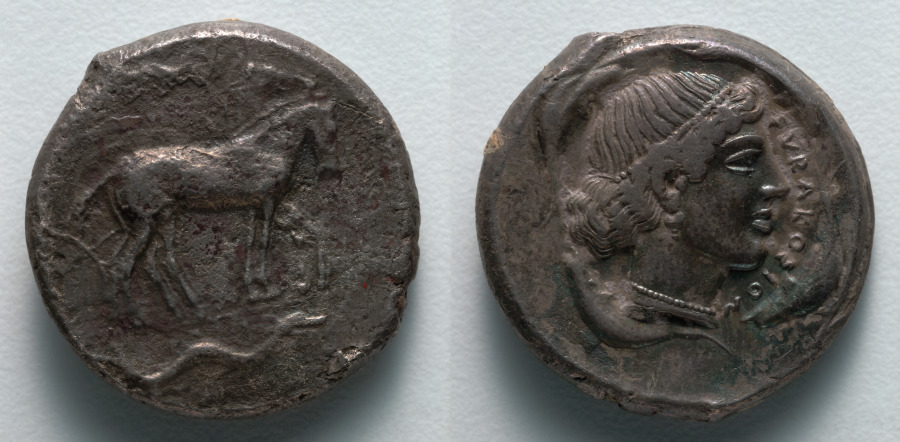
Tetradrachm: Quadriga (obverse); Head of Arethousa (reverse) (c. 467–440 BCE) is in the Cleveland Museum of Art collection.
The work and its context
The museum's open-access catalogue describes the work:
On the obverse of this highly symbolic coin is the head of Arethousa, a local goddess of Syracuse who fled from mainland Greece and arose on the site as a freshwater fountain. Four dolphins swim around her, suggesting Syracuse’s humble beginnings as a small island colony. On the reverse, a racing four-horse chariot recalls Syracuse’s past victories in Panhellenic games.
Object facts
- Title: Tetradrachm: Quadriga (obverse); Head of Arethousa (reverse)
- Date: c. 467–440 BCE
- Culture: Greek, minted at Syracuse (Sicily)
- Type: Coins
- Technique: silver
- Dimensions: Diameter: 2.5 cm (1 in.)
- Collection: GR - Greek
- Department: Greek and Roman Art
- Accession number: 1916.976
A detail from the museum
Three dolphins and a bit of a fourth are still visible swimming clockwise around Arethousa.
Collection credit
Gift of J. H. Wade
View the collection record
See the museum's photographs and full catalogue entry. Catalogue text is reproduced from the Cleveland Museum of Art's open-access data, with HTML formatting removed. This object and its supplied image are designated CC0.
Sources
More in Lifestyle
Keep reading