Single Stem Vase (1914–46): Art, History and Details
Single Stem Vase at the Cleveland Museum of Art: 1914–46, Porcelain with molded design and copper-red glaze. Explore the work's context, creator attribution and collection history.
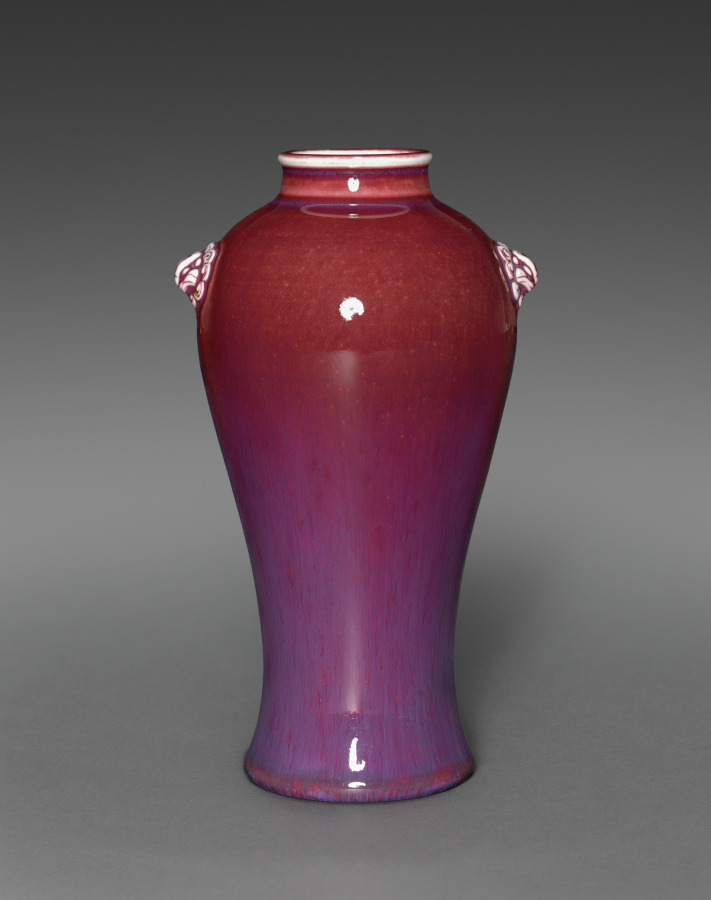
Single Stem Vase (1914–46) is in the Cleveland Museum of Art collection. The museum's creator attribution is Seifū Yohei IV (Japanese, 1872–1951).
The work and its context
The museum's open-access catalogue describes the work:
This vase is copper red in color at the top and becomes purple closer to the bottom, not unlike a Chinese transformation or flambé glaze with mottling and dripping of the glaze. The lip of the vase and much of the lion-head designs remain white. On the box lid, the color of the glaze is called shinsha, which is often glossed as copper red or oxblood, or sometimes cinnabar. Here, it is meant to refer to a Qing-dynasty glazing technique developed in an effort to reproduce a red glaze used during the reign of the Xuande emperor (1426–35) of the Ming dynasty.
Object facts
- Title: Single Stem Vase
- Date: 1914–46
- Creator attribution: Seifū Yohei IV (Japanese, 1872–1951)
- Culture: Japan, Taishō period (1912–26)
- Type: Ceramic
- Technique: Porcelain with molded design and copper-red glaze
- Dimensions: height: 17.1 cm (6 3/4 in.); Diameter: 9.5 cm (3 3/4 in.)
- Collection: Japanese Art
- Department: Japanese Art
- Accession number: 2022.210
A detail from the museum
This vase has lion heads for “ears."
Collection credit
Gift of James and Christine Heusinger
Further reading listed by the museum
- Maezaki, Shinya and Sinéad Vilbar. Colors of Kyoto: The Seifū Yohei Ceramic Studio. Cleveland, OH: The Cleveland Museum of Art, 2023.
View the collection record
See the museum's photographs and full catalogue entry. Catalogue text is reproduced from the Cleveland Museum of Art's open-access data, with HTML formatting removed. This object and its supplied image are designated CC0.
Sources
More in Lifestyle
Keep reading