Sketches of Heads (verso, left); Two Women (verso, right) (c. 1770–75): Art, History and Details
Sketches of Heads (verso, left); Two Women (verso, right) at the Cleveland Museum of Art: c. 1770–75, left: graphite; right: gray and black wash with point of brush and graphite. Explore the work's context, creator attribution and collectio
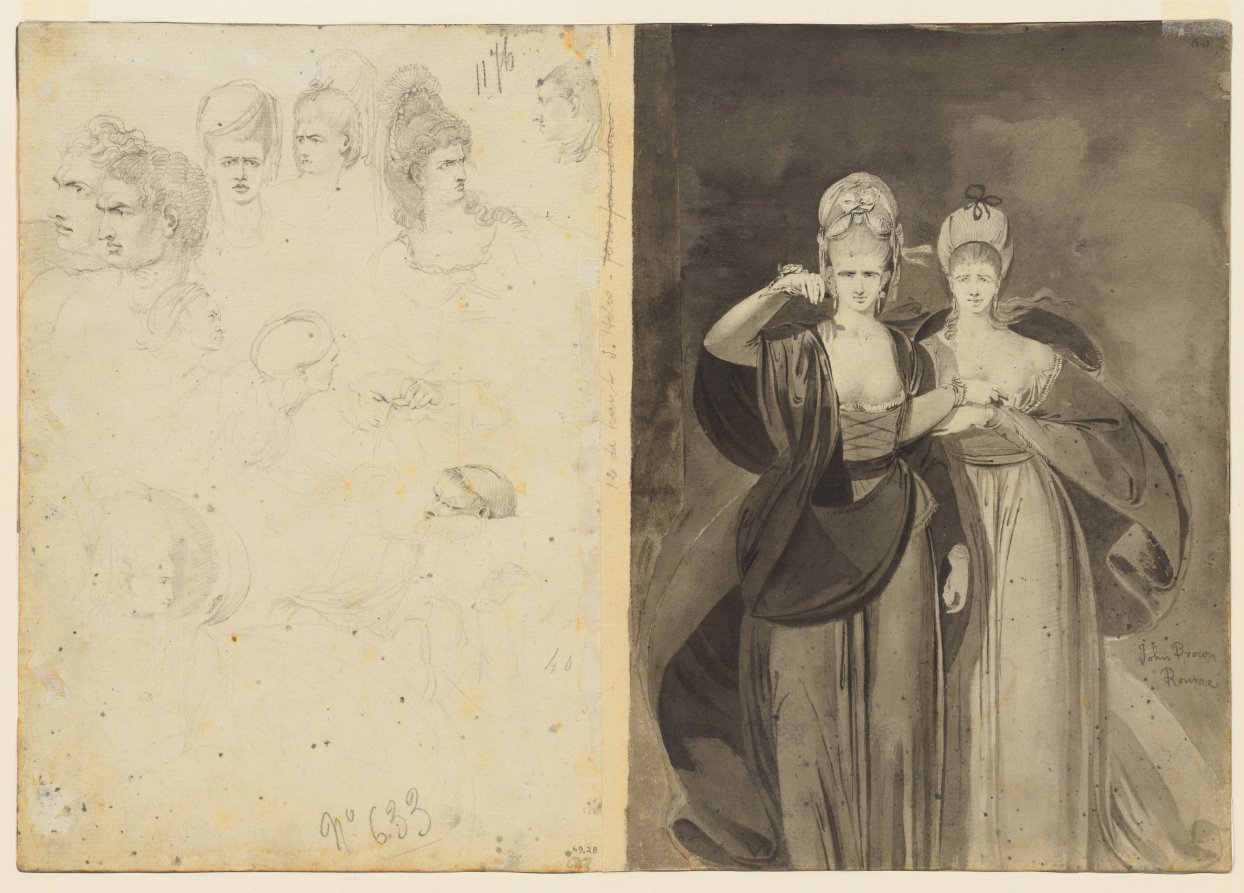
Sketches of Heads (verso, left); Two Women (verso, right) (c. 1770–75) is in the Cleveland Museum of Art collection. The museum's creator attribution is John Brown (British, 1752–1787).
The work and its context
The museum's open-access catalogue describes the work:
John Brown is known for a small group of monochromatic drawings imbued with sinister overtones. At the age of 20, the Scottish artist traveled to Italy where he spent the next 12 years. This drawing exemplifies his Roman street scenes which often depict women dressed in spectacular, billowing costumes. Here, a figure with bare ankles and plunging décolletage is surrounded by a crowd of men who leer at her. The reverse of the sketchbook sheet includes two independent drawings: a study of faces in fierce and intense expressions, and a pair of women wearing swirling gowns. One figure raises her hand in a mysterious gesture, either beckoning or forewarning the viewer.
Object facts
- Title: Sketches of Heads (verso, left); Two Women (verso, right)
- Date: c. 1770–75
- Creator attribution: John Brown (British, 1752–1787)
- Culture: England, 18th century
- Type: Drawing
- Technique: left: graphite; right: gray and black wash with point of brush and graphite
- Dimensions: Sheet: 25.7 x 18.6 cm (10 1/8 x 7 5/16 in.)
- Collection: DR - British
- Department: Drawings
- Accession number: 1969.28.b
A detail from the museum
John Brown meant for the dark background of this drawing to evoke the potential danger of Italian nights; the writer Johann Joachim Winckelmann had been murdered in Trieste in 1768, in the most conspicuous example of the period's widespread violence.
Collection credit
Dudley P. Allen Fund
View the collection record
See the museum's photographs and full catalogue entry. Catalogue text is reproduced from the Cleveland Museum of Art's open-access data, with HTML formatting removed. This object and its supplied image are designated CC0.
Sources
More in Lifestyle
Keep reading