Sleeved Tunic (1460s–1532): Art, History and Details
Sleeved Tunic at the Cleveland Museum of Art: 1460s–1532, Cotton, camelid fiber. Explore the work's context, creator attribution and collection history.
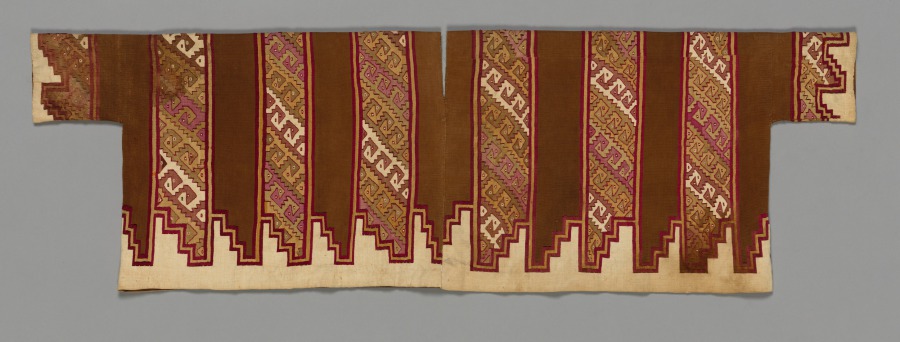
Sleeved Tunic (1460s–1532) is in the Cleveland Museum of Art collection.
The work and its context
The museum's open-access catalogue describes the work:
The Chancay (chan-kai) people of Peru’s central coast created one of the ancient Andes’s best-known textile legacies through artistically elaborate men’s tunics and loin cloths, women’s dresses and headcloths, and shawl-like mantles. Two traits indicate that this tunic is a high-prestige garment: its labor-intensive tapestry-woven technique and its substantial use of alpaca fiber imported from the adjacent highlands.
Object facts
- Title: Sleeved Tunic
- Date: 1460s–1532
- Culture: Central Andes, central coast, Chancay people
- Type: Textile
- Technique: Cotton, camelid fiber
- Dimensions: length back of neck to hem: 40.6 cm (16 in.); width across shoulders: 128.9 cm (50 3/4 in.)
- Collection: T - Pre-Columbian
- Department: Textiles
- Accession number: 2017.193
Collection credit
Severance and Greta Millikin Purchase Fund
Further reading listed by the museum
- Bergh, Susan E. “Acquisition Highlights: Pre-Columbian Art.” Cleveland Art: Cleveland Museum of Art Members Magazine 58, no. 2 (March/April 2018): 8-9.
View the collection record
See the museum's photographs and full catalogue entry. Catalogue text is reproduced from the Cleveland Museum of Art's open-access data, with HTML formatting removed. This object and its supplied image are designated CC0.
Sources
More in Lifestyle
Keep reading