Tea bowl (1700s): Art, History and Details
Tea bowl at the Cleveland Museum of Art: 1700s, glazed stoneware. Explore the work's context, creator attribution and collection history.
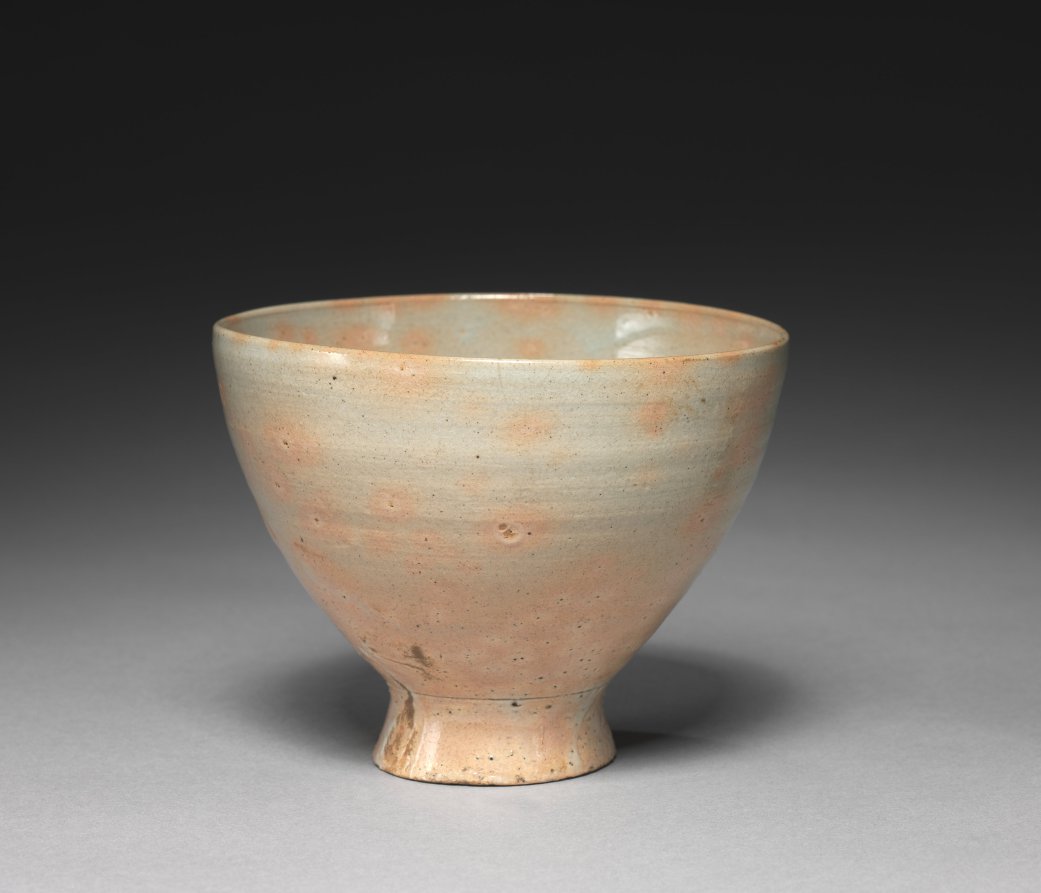
Tea bowl (1700s) is in the Cleveland Museum of Art collection.
The work and its context
The museum's open-access catalogue describes the work:
Possibly produced in one of the kilns established by the trading office (Waegwan) in Busan, southern Gyeongsang province, this type of bowl with an elongated foot was exported to Japan and circulated as an item of foreign luxury among Japanese tea ware collectors. Pinholes in the light pinkish glaze were intended to resemble "fawn spots."
Object facts
- Title: Tea bowl
- Date: 1700s
- Culture: Korea, Joseon dynasty (1392–1910)
- Type: Ceramic
- Technique: glazed stoneware
- Dimensions: Diameter of mouth: 13.7 cm (5 3/8 in.); Overall: 11 cm (4 5/16 in.)
- Collection: Korean Art
- Department: Korean Art
- Accession number: 1986.84
Collection credit
Edward L. Whittemore Fund
Further reading listed by the museum
- Jeong, Dong-ju. From Joseon Rice Bowl to Yido Tea Bowl [조선 막사발과 이도다완]. Paju: Hangil ateu, 2012.
- Hur, Nam-lin. “Korean Tea Bowls (Kōrai Chawan) and Japanese Wabicha: A Story of Acculturation in Premodern Northeast Asia.” Korean Studies 39 (2015): 1–22.
- Kang, Mu-Chang. "A Study on the Characteristics of Japanese Made-to-Order Ceramics and the Transition Process of Busan Waegwanyo Kiln - With a focus on Commissioned Tea Bowls [일본 주문 도자기의 특징과 부산 왜관요 변천과정에 관한 연구 - 주문다완(御本茶碗)을 중심으로]." Hankuk dojahak yeongu 17, no. 3 (2020): 5–19.
View the collection record
See the museum's photographs and full catalogue entry. Catalogue text is reproduced from the Cleveland Museum of Art's open-access data, with HTML formatting removed. This object and its supplied image are designated CC0.
Sources
More in Lifestyle
Keep reading