Spoon (918–1392): Art, History and Details
Spoon at the Cleveland Museum of Art: 918–1392, bronze. Explore the work's context, creator attribution and collection history.
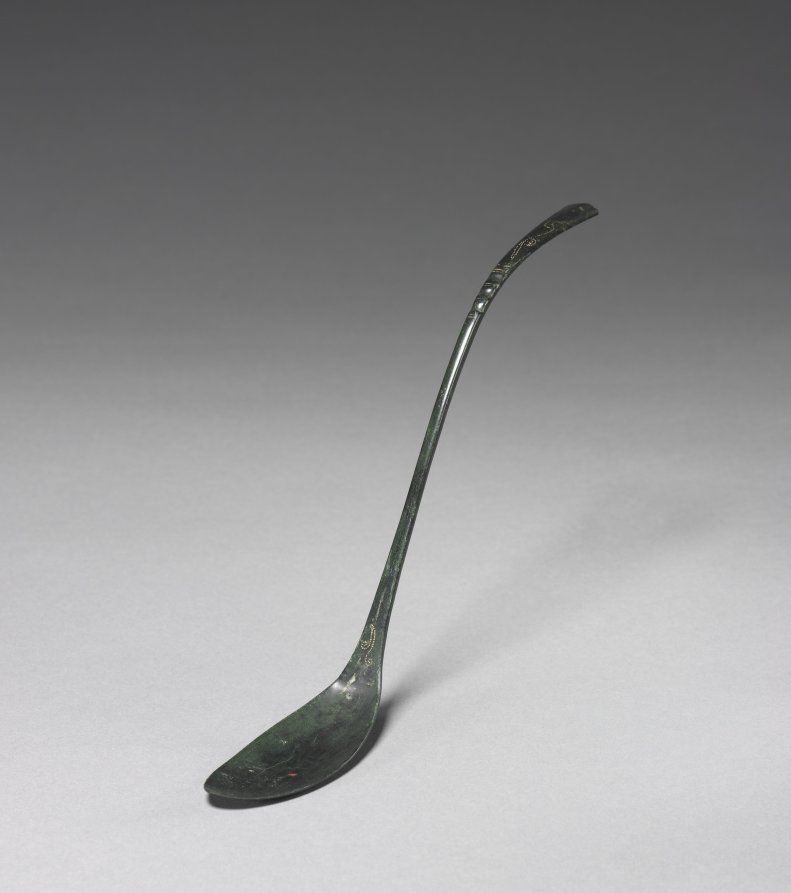
Spoon (918–1392) is in the Cleveland Museum of Art collection.
The work and its context
The museum's open-access catalogue describes the work:
Celadons, spoons, seals, and bronze mirrors were the most common burial objects in tombs during the Goryeo period (918–1392). Furnishing tombs with an elaborate assemblage of objects was believed to honor and comfort the newly dead. Generally, Goryeo tombs were left untouched until the late 1800s. During the colonial period (1910–45), however, Japanese archaeologists hastily excavated the tombs located in Kaeseong, the former capital of the Goryeo period. Scholars recently have proposed that toward the end of the 14th century, Koreans enjoyed meat-based soups more than any other dishes, explaining why many more spoons than chopsticks were buried in tombs.
Object facts
- Title: Spoon
- Date: 918–1392
- Culture: Korea, Goryeo dynasty (918–1392)
- Type: Metalwork
- Technique: bronze
- Dimensions: Overall: 26 cm (10 1/4 in.)
- Collection: Korean Art
- Department: Korean Art
- Accession number: 1918.538
A detail from the museum
Bronze spoons are the most common burial items. Scholars have proposed that toward the end of the 1300s, Koreans enjoyed meat-based soups more than any other dishes, explaining why spoons became common household items as well as burial goods.
Collection credit
General Income Fund
Further reading listed by the museum
- Goryeo Dynasty: Korea's Age of Enlightenment, 918-1392. San Francisco: Asian Art Museum, 2003.
- Horlyck Charlotte. "The Eternal Link: Grave Goods of the Koryŏ Kingdom (918-1392 CE)." Ars Orientalis, no. 44 (2014): 156–179.
- Yun, Seong-jae. “The Special Meanings of Spoons and Chopsticks in the Goryeo Dynasty [고려시대 분묘출토 청동수저].” Yeoksa wa silhak (2015): 51–68.
View the collection record
See the museum's photographs and full catalogue entry. Catalogue text is reproduced from the Cleveland Museum of Art's open-access data, with HTML formatting removed. This object and its supplied image are designated CC0.
Sources
More in Lifestyle
Keep reading