Statuette of Kneeling King (304–30 BCE): Art, History and Details
Statuette of Kneeling King at the Cleveland Museum of Art: 304–30 BCE, bronze, solid cast. Explore the work's context, creator attribution and collection history.
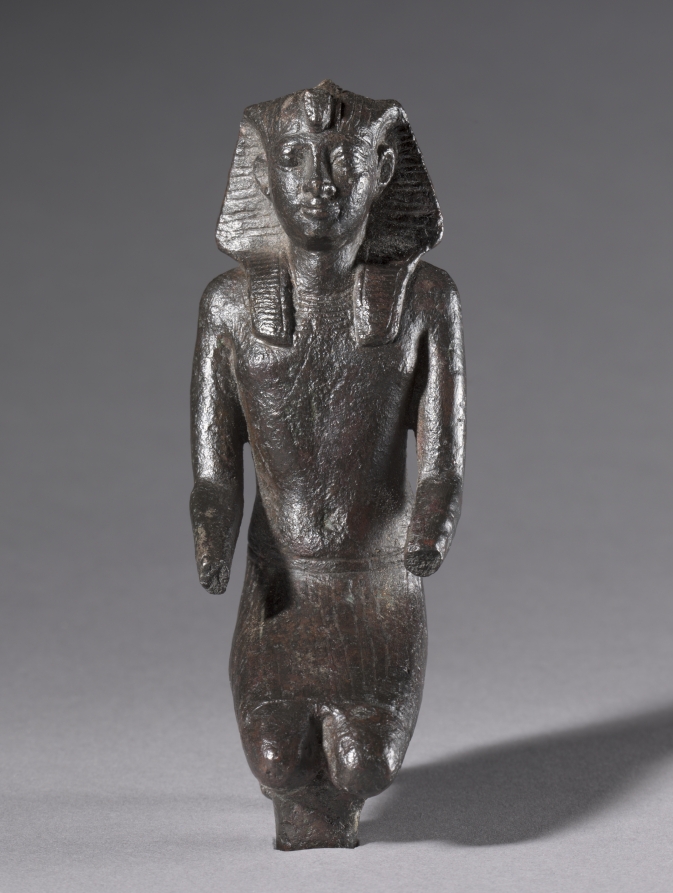
Statuette of Kneeling King (304–30 BCE) is in the Cleveland Museum of Art collection.
The work and its context
The museum's open-access catalogue describes the work:
As the chief intermediary between gods and men, the Egyptian king is often shown kneeling in adoration. Enough remains of this king's arms to indicate that his hands may have held offering jars or were extended with the palms facing each other around a naos, or shrine, containing a divine image. In Egypt, adoration required a divine recipient. This example was undoubtedly part of a group composition in which the king faced a larger figure of a god.
Object facts
- Title: Statuette of Kneeling King
- Date: 304–30 BCE
- Culture: Egypt, Greco-Roman period (332 BCE–395 CE), Ptolemaic dynasty (305–30 BCE)
- Type: Sculpture
- Technique: bronze, solid cast
- Dimensions: Overall: 4.2 x 5.5 cm (1 5/8 x 2 3/16 in.); with tang: 12.7 cm (5 in.); without tang: 11 cm (4 5/16 in.)
- Collection: Egypt - Ptolemaic Dynasty
- Department: Egyptian and Ancient Near Eastern Art
- Accession number: 1914.575
Collection credit
Gift of the John Huntington Art and Polytechnic Trust
Further reading listed by the museum
- Berman, Lawrence M., and Kenneth J. Bohač. Catalogue of Egyptian Art: The Cleveland Museum of Art. Cleveland, OH: Cleveland Museum of Art, 1999
View the collection record
See the museum's photographs and full catalogue entry. Catalogue text is reproduced from the Cleveland Museum of Art's open-access data, with HTML formatting removed. This object and its supplied image are designated CC0.
Sources
More in Lifestyle
Keep reading


