Sweet Melancholy (1756): Art, History and Details
Sweet Melancholy at the Cleveland Museum of Art: 1756, oil on canvas. Explore the work's context, creator attribution and collection history.
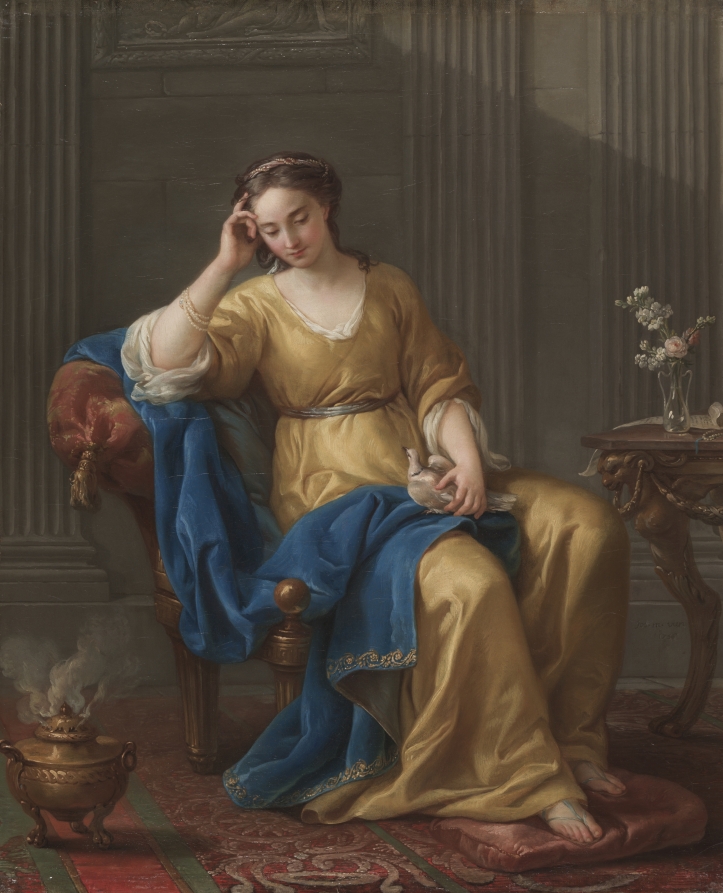
Sweet Melancholy (1756) is in the Cleveland Museum of Art collection. The museum's creator attribution is Joseph-Marie Vien (French, 1716–1809).
The work and its context
The museum's open-access catalogue describes the work:
The chair, brazier, table, and the setting all show Vien's interest in bringing archaeological accuracy to a new level of precision. Yet his delicate handling and graceful palette derive squarely from 18th-century French painting. The gesture of the melancholic figure, with her head on her hand, has roots going back to the Renaissance. Nonetheless, the painting has a wistful rather than tragic tone. Indeed, images of women in interiors, contemplating a letter with longing or sadness, derive from earlier Dutch paintings of daily life, here transformed into an ancient context.
Object facts
- Title: Sweet Melancholy
- Date: 1756
- Creator attribution: Joseph-Marie Vien (French, 1716–1809)
- Culture: France
- Type: Painting
- Technique: oil on canvas
- Dimensions: Framed: 86.4 x 76.2 x 6.5 cm (34 x 30 x 2 9/16 in.); Unframed: 68 x 55 cm (26 3/4 x 21 5/8 in.)
- Collection: P - French 18th Century
- Department: European Painting and Sculpture
- Accession number: 1996.1
A detail from the museum
Look closely—three strands of pearls appear in this painting.
Collection credit
Mr. and Mrs. William H. Marlatt Fund
Further reading listed by the museum
- Exhibited at the Salon of 1757.
- Le Brun, Jean-Baptiste-Pierre, Jean-Baptiste Du Barry, and Pierre Remy. Catalogue de tableaux originaux des bons maitres des trois ecoles, figures et bustes de marbre et de bronze, porcelaines et autres objets curieux qui composent le cabinet de M.L.C. de D. 1774.
- Pierre Remy (Firm). Catalogue d'une riche collection de tableaux des maîtres les plus célebres des trois écoles: qui composent le cabinet de feu son Altesse Sérenissime Monseigneur le Prince de Conti, prince du sang, & grand prieur de France. Paris: Muzier père, Pierre Remy, 1777.
View the collection record
See the museum's photographs and full catalogue entry. Catalogue text is reproduced from the Cleveland Museum of Art's open-access data, with HTML formatting removed. This object and its supplied image are designated CC0.
Sources
More in Lifestyle
Keep reading