Tetradrachm: Quadriga (obverse); Head of Arethousa (reverse) (c. 430–420 BCE): Art, History and Details
Tetradrachm: Quadriga (obverse); Head of Arethousa (reverse) at the Cleveland Museum of Art: c. 430–420 BCE, silver. Explore the work's context, creator attribution and collection history.
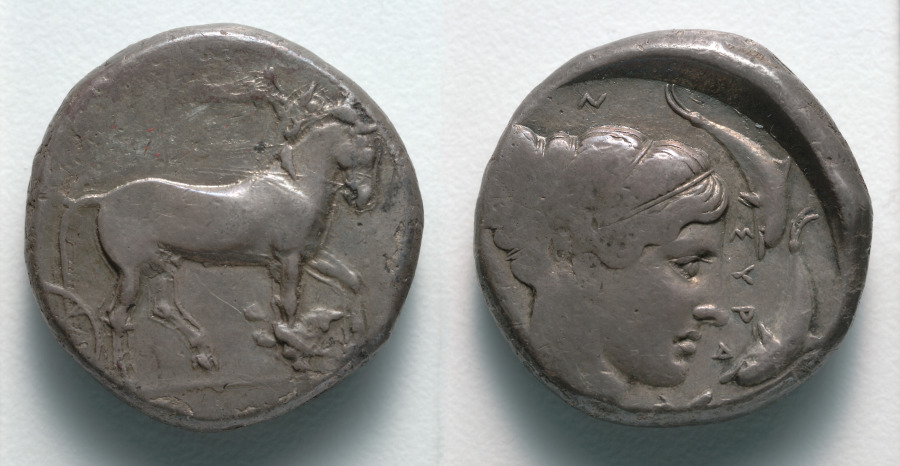
Tetradrachm: Quadriga (obverse); Head of Arethousa (reverse) (c. 430–420 BCE) is in the Cleveland Museum of Art collection.
The work and its context
The museum's open-access catalogue describes the work:
The rightmost horse of a chariot team dominates the obverse of this coin, while the other three are suggested only by contours. On the reverse, four dolphins should surround Arethousa, but poor positioning during the striking process has left off one and most of another. The lumps around the horses’ front legs suggest a die defect.
Object facts
- Title: Tetradrachm: Quadriga (obverse); Head of Arethousa (reverse)
- Date: c. 430–420 BCE
- Culture: Greek, minted at Syracuse (Sicily)
- Type: Coins
- Technique: silver
- Dimensions: Diameter: 2.4 cm (15/16 in.)
- Collection: GR - Greek
- Department: Greek and Roman Art
- Accession number: 1916.980
A detail from the museum
Arethousa’s banded hairstyle provides remarkable contemporaneous evidence of ancient Greek women’s fashions.
Collection credit
Gift of J. H. Wade
View the collection record
See the museum's photographs and full catalogue entry. Catalogue text is reproduced from the Cleveland Museum of Art's open-access data, with HTML formatting removed. This object and its supplied image are designated CC0.
Sources
More in Lifestyle
Keep reading