The Blue Passion-flower (1799–1807): Art, History and Details
The Blue Passion-flower at the Cleveland Museum of Art: 1799–1807, aquatint, stipple, line engraving, etching and roulette. Explore the work's context, creator attribution and collection history.
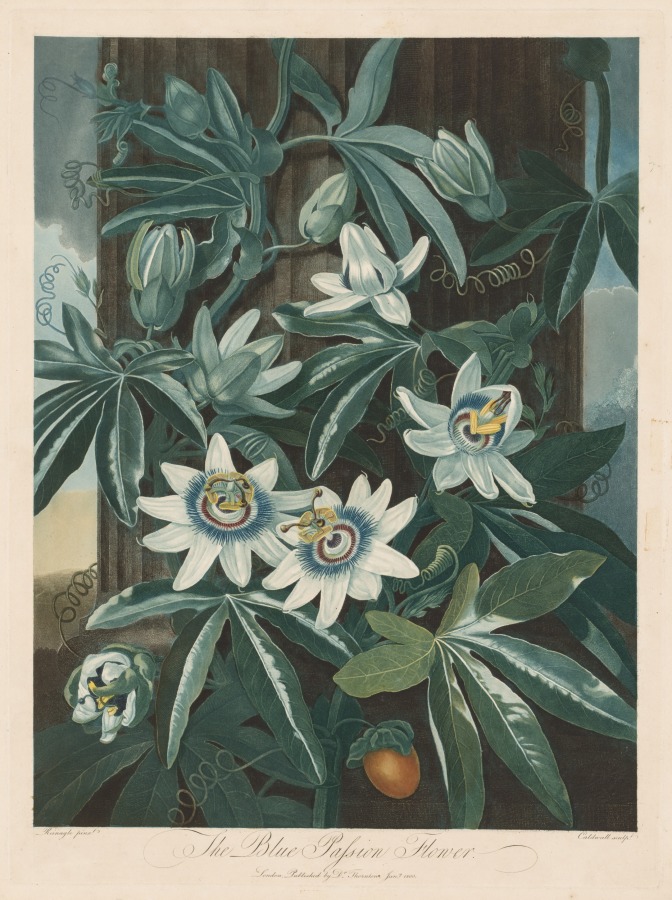
The Blue Passion-flower (1799–1807) is in the Cleveland Museum of Art collection. The museum's creator attribution is Robert John Thornton (British, 1768–1837).
The work and its context
The museum's open-access catalogue describes the work:
In the 18th century, new engraving and etching techniques offered a variety of tonal effects that enhanced botanical prints. While mezzotint (in which the plate is roughened and then the engraver works from dark to light creating different values) and stipple (dots create values) make it possible to create the rich tonal scale and velvety texture of oil paint, aquatint imitates the delicacy and transparency of watercolor and ink wash.
Object facts
- Title: The Blue Passion-flower
- Date: 1799–1807
- Creator attribution: Robert John Thornton (British, 1768–1837)
- Culture: England, late 18th-early 19th Century
- Type: Print
- Technique: aquatint, stipple, line engraving, etching and roulette
- Collection: PR - Aquatint
- Department: Prints
- Accession number: 1939.293
Collection credit
Gift of The Print Club of Cleveland, for the Donald Gray Memorial Collection
View the collection record
See the museum's photographs and full catalogue entry. Catalogue text is reproduced from the Cleveland Museum of Art's open-access data, with HTML formatting removed. This object and its supplied image are designated CC0.
Sources
More in Lifestyle
Keep reading