The Body of Christ in the Sepulchre (1654): Art, History and Details
The Body of Christ in the Sepulchre at the Cleveland Museum of Art: 1654, etching and engraving. Explore the work's context, creator attribution and collection history.
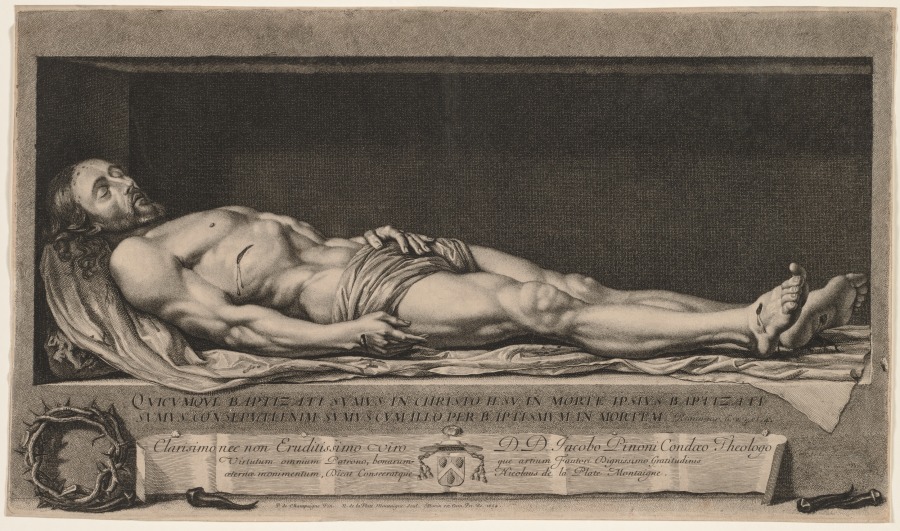
The Body of Christ in the Sepulchre (1654) is in the Cleveland Museum of Art collection. The museum's creator attribution is Nicolas de Platte-Montagne (French, 1631–1706); Philippe de Champaigne (French, 1602–1674).
The work and its context
The museum's open-access catalogue describes the work:
In addition to his activities as a portrait and history painter, Plattemontagne was one of the greatest printmakers in France during the 17th century. The Body of Christ in the Sepulchre is one of the artist's masterpieces. Here the combination of etching and engraving is particularly effective in creating dramatic effects of light, shade, and texture.
Object facts
- Title: The Body of Christ in the Sepulchre
- Date: 1654
- Creator attribution: Nicolas de Platte-Montagne (French, 1631–1706); Philippe de Champaigne (French, 1602–1674)
- Culture: France
- Type: Print
- Technique: etching and engraving
- Dimensions: Sheet: 34.1 x 58.9 cm (13 7/16 x 23 3/16 in.); Platemark: 33.5 x 58.6 cm (13 3/16 x 23 1/16 in.)
- Collection: PR - Etching
- Department: Prints
- Accession number: 1997.177
Collection credit
John L. Severance Fund
View the collection record
See the museum's photographs and full catalogue entry. Catalogue text is reproduced from the Cleveland Museum of Art's open-access data, with HTML formatting removed. This object and its supplied image are designated CC0.
Sources
More in Lifestyle
Keep reading