The Calvary (c. 1520): Art, History and Details
The Calvary at the Cleveland Museum of Art: c. 1520, etching. Explore the work's context, creator attribution and collection history.
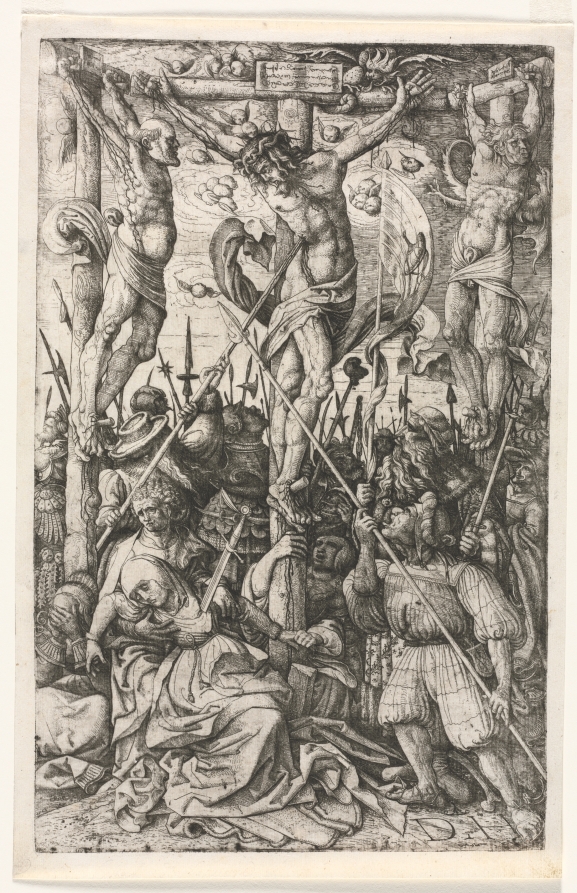
The Calvary (c. 1520) is in the Cleveland Museum of Art collection. The museum's creator attribution is Daniel Hopfer (German, c. 1470–1536).
The work and its context
The museum's open-access catalogue describes the work:
Although recipes for etching iron and steel are recorded at least as early as 1400, scholars have been unable to show that armor designs were etched in Italy or Germany before the end of the 15th century. As early as 1500 iron plates were also used to make prints, probably first in Augsburg, Germany, in the workshop of Daniel Hopfer. Etching allows the artist to draw freely on the plate and so is less laborious than engraving. Because of the acid then available, only iron or steel plates could be used and these rusted. For this reason only a small number of etchings were made (including six by Albrecht Dürer) until about 1550, when the technical difficulties of using copper plates had been overcome.
Object facts
- Title: The Calvary
- Date: c. 1520
- Creator attribution: Daniel Hopfer (German, c. 1470–1536)
- Culture: Germany
- Type: Print
- Technique: etching
- Collection: PR - Etching
- Department: Prints
- Accession number: 1995.14
Collection credit
Edwin R. and Harriet Pelton Perkins Memorial Fund
View the collection record
See the museum's photographs and full catalogue entry. Catalogue text is reproduced from the Cleveland Museum of Art's open-access data, with HTML formatting removed. This object and its supplied image are designated CC0.
Sources
More in Lifestyle
Keep reading