The Goddess Annihilates the Demon Raktabija, from a Devi-Mahatmya (c. 1640): Art, History and Details
The Goddess Annihilates the Demon Raktabija, from a Devi-Mahatmya at the Cleveland Museum of Art: c. 1640, gum tempera, ink, and gold on paper. Explore the work's context, creator attribution and collection history.
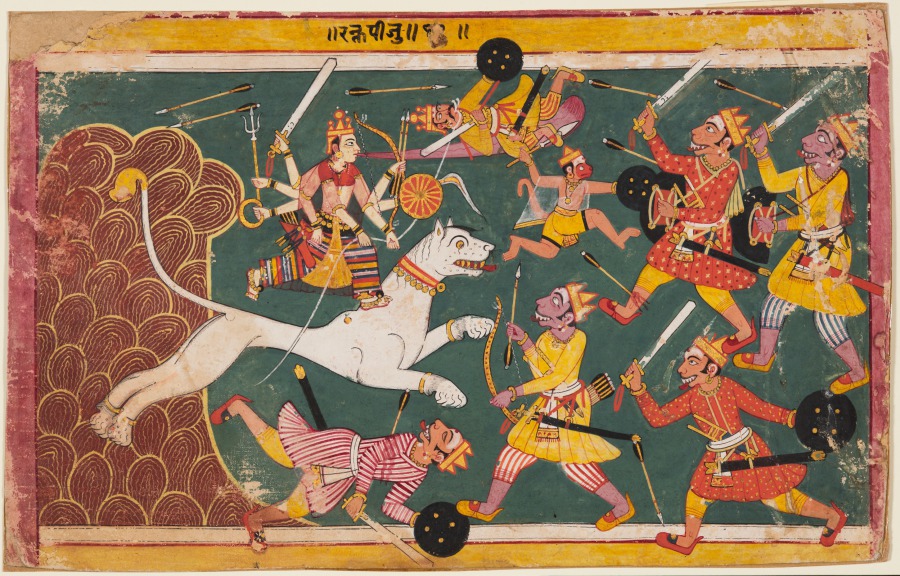
The Goddess Annihilates the Demon Raktabija, from a Devi-Mahatmya (c. 1640) is in the Cleveland Museum of Art collection.
The work and its context
The museum's open-access catalogue describes the work:
The demon Raktabija had received a boon that from each drop of his blood that falls on the ground, a new demon would arise. When the Goddess wounded Raktabija in combat, and drops of his blood fell on the ground and generated new Raktabijas, she extended her tongue to catch every drop before it hit the ground. Here she is shown lapping up Raktabija himself.
Object facts
- Title: The Goddess Annihilates the Demon Raktabija, from a Devi-Mahatmya
- Date: c. 1640
- Culture: Central India, Madhya Pradesh, Malwa
- Type: Painting
- Technique: gum tempera, ink, and gold on paper
- Dimensions: Page: 16.2 x 25.7 cm (6 3/8 x 10 1/8 in.)
- Collection: Indian Art
- Department: Indian and Southeast Asian Art
- Accession number: 2018.128
A detail from the museum
The painting also depicts Hanuman, the monkey god, fighting for the Goddess.
Collection credit
Purchase and partial gift from the Catherine and Ralph Benkaim Collection; Severance and Greta Millikin Purchase Fund
View the collection record
See the museum's photographs and full catalogue entry. Catalogue text is reproduced from the Cleveland Museum of Art's open-access data, with HTML formatting removed. This object and its supplied image are designated CC0.
Sources
More in Lifestyle
Keep reading