The Mill and Waterfall of Grésy near Aix-les-Bains (1856): Art, History and Details
The Mill and Waterfall of Grésy near Aix-les-Bains at the Cleveland Museum of Art: 1856, etching on chine collé. Explore the work's context, creator attribution and collection history.
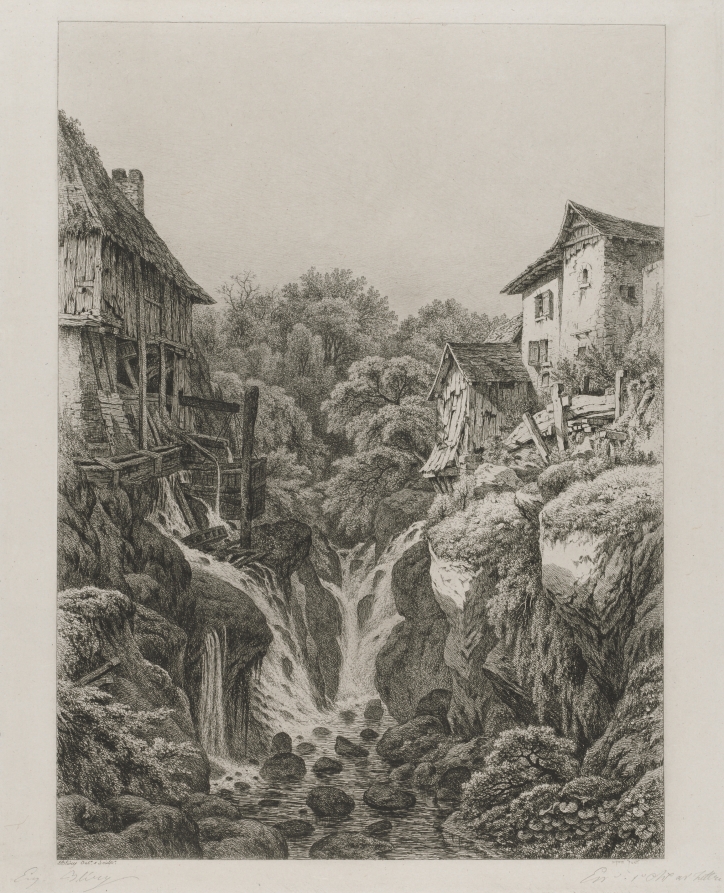
The Mill and Waterfall of Grésy near Aix-les-Bains (1856) is in the Cleveland Museum of Art collection. The museum's creator attribution is Eugene Bléry (French, 1805–1886).
The work and its context
The museum's open-access catalogue describes the work:
Bléry worked directly from nature or from his own drawings, and his landscape etchings are meticulous, delicate, and highly wrought. He was deeply influenced by Dutch 17th-century landscapes, particularly those by Meindert Hobbema and Jacob van Ruisdael, both of whom Bléry copied. The Mill and Waterfall of Grésy near Aix-les-Bains is one of the artist’s original compositions and reveals the attention that he lavished on the natural world. The Romantic overtones of this composition are related to numerous German landscapes of the period.
Object facts
- Title: The Mill and Waterfall of Grésy near Aix-les-Bains
- Date: 1856
- Creator attribution: Eugene Bléry (French, 1805–1886)
- Culture: France, 19th century
- Type: Print
- Technique: etching on chine collé
- Collection: PR - Etching
- Department: Prints
- Accession number: 2009.491
Collection credit
Gift of John Bonebrake
View the collection record
See the museum's photographs and full catalogue entry. Catalogue text is reproduced from the Cleveland Museum of Art's open-access data, with HTML formatting removed. This object and its supplied image are designated CC0.
Sources
More in Lifestyle
Keep reading