The Paranirvana of Buddha, Gal Vihara, Polonnaruva, Ceylon (1870–71): Art, History and Details
The Paranirvana of Buddha, Gal Vihara, Polonnaruva, Ceylon at the Cleveland Museum of Art: 1870–71, albumen print. Explore the work's context, creator attribution and collection history.
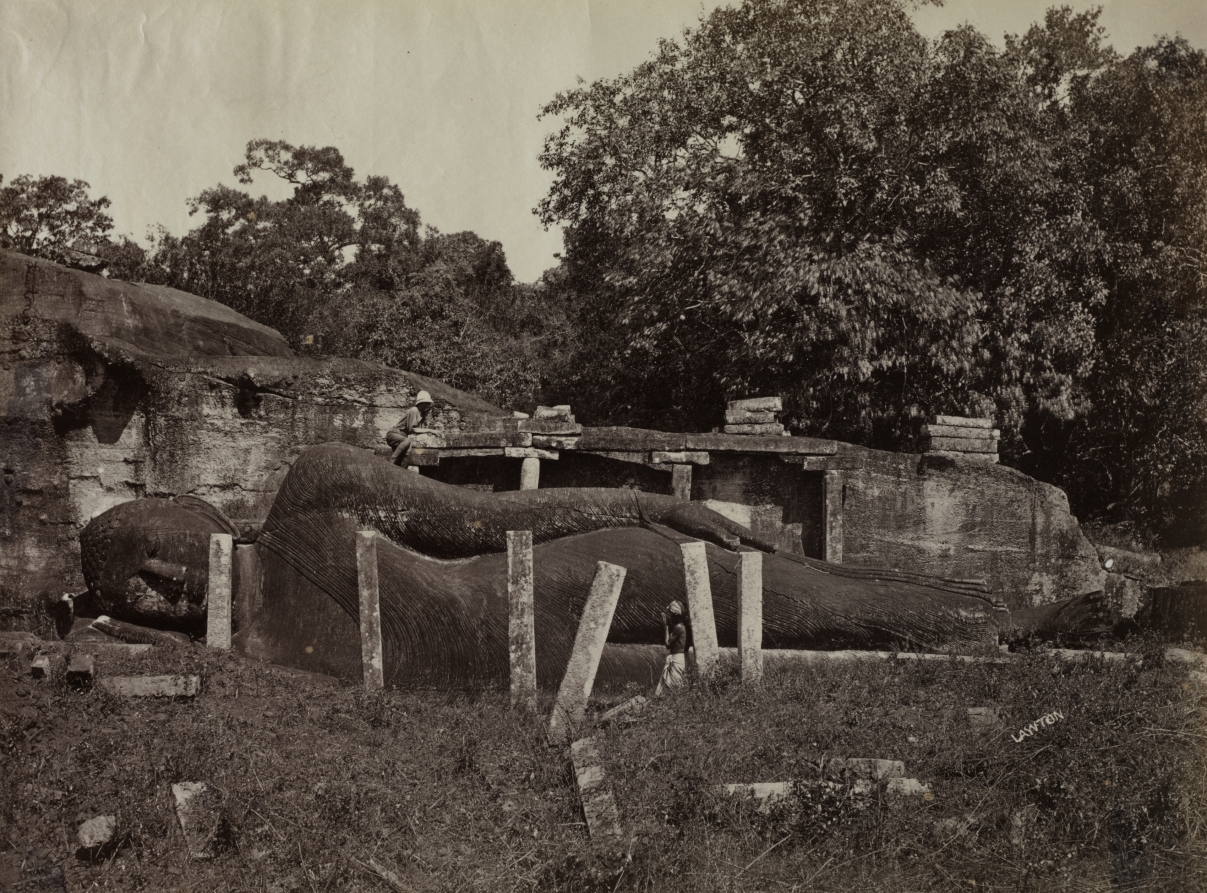
The Paranirvana of Buddha, Gal Vihara, Polonnaruva, Ceylon (1870–71) is in the Cleveland Museum of Art collection. The museum's creator attribution is Joseph Lawton (British, d. 1874).
The work and its context
The museum's open-access catalogue describes the work:
During the British colonial period in Sri Lanka (Ceylon), a 12th-century monastic establishment with a colossal stone sculpture of the reclining Buddha had fallen into ruins. The photographer’s intentional inclusion of a Sri Lankan man, leaning against a pillar at the front of the composition, and a colonial Englishman, clambering over Buddha’s body, underscores how differently they interact with the site. The Sri Lankan visitor views the ruins with devotional reverence; the Englishman treats it as a place of adventurous entertainment.
Object facts
- Title: The Paranirvana of Buddha, Gal Vihara, Polonnaruva, Ceylon
- Date: 1870–71
- Creator attribution: Joseph Lawton (British, d. 1874)
- Culture: England, 19th century
- Type: Photograph
- Technique: albumen print
- Dimensions: Image: 21.4 x 28.2 cm (8 7/16 x 11 1/8 in.); Matted: 35.6 x 45.7 cm (14 x 18 in.)
- Collection: PH - British 19th Century
- Department: Photography
- Accession number: 1976.156
Collection credit
Gift of Louise S. Richards
Further reading listed by the museum
- Cleveland Museum of Art, Tom E Hinson. Catalogue of Photography. Cleveland, OH: Cleveland Museum of Art, 1996.
View the collection record
See the museum's photographs and full catalogue entry. Catalogue text is reproduced from the Cleveland Museum of Art's open-access data, with HTML formatting removed. This object and its supplied image are designated CC0.
Sources
More in Lifestyle
Keep reading