The Passion: Christ Taken Captive (c. 1480): Art, History and Details
The Passion: Christ Taken Captive at the Cleveland Museum of Art: c. 1480, engraving. Explore the work's context, creator attribution and collection history.
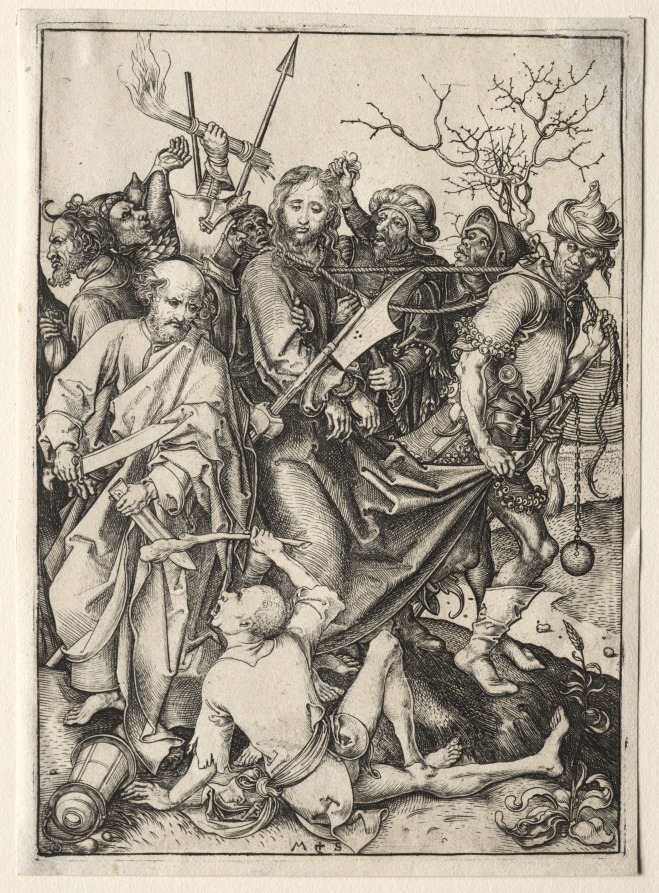
The Passion: Christ Taken Captive (c. 1480) is in the Cleveland Museum of Art collection. The museum's creator attribution is Martin Schongauer (German, c. 1450–1491).
The work and its context
The museum's open-access catalogue describes the work:
Martin Schongauer's series of the Passion of Christ was his largest set of engravings, made around 1480, and extensively copied across Europe. It consists of twelve prints detailing the suffering of Christ in the last days of his life. Schongauer's version focuses on crowded scenes, grotesque physiognomies of Christ's tormentors, and great pathos in the compositions. Here, Christ—with his hands tied—is led away with a rope around his neck by one of his captors. A second soldier seizes him by his left arm, and a third one grasps a lock of his hair. In the foreground, Peter, in an attempt to save Christ, cuts the ear of the soldier Malchus with his sword. Judas, instead, flees with his bag of silver at left.
Object facts
- Title: The Passion: Christ Taken Captive
- Date: c. 1480
- Creator attribution: Martin Schongauer (German, c. 1450–1491)
- Culture: Germany
- Type: Print
- Technique: engraving
- Collection: PR - Engraving
- Department: Prints
- Accession number: 1922.88
A detail from the museum
Though the Roman soldier on the right holds a ball and chain weapon (or flail), such weapons are not known to have been used by the Roman military.
Collection credit
Gift of The Print Club of Cleveland
View the collection record
See the museum's photographs and full catalogue entry. Catalogue text is reproduced from the Cleveland Museum of Art's open-access data, with HTML formatting removed. This object and its supplied image are designated CC0.
Sources
More in Lifestyle
Keep reading