The place of Jesus’s birth (folio 25 recto), from a Mirror of Holiness (Mir’at al-quds) of Father Jerome Xavier (1602–4): Art, History and Details
The place of Jesus’s birth (folio 25 recto), from a Mirror of Holiness (Mir’at al-quds) of Father Jerome Xavier at the Cleveland Museum of Art: 1602–4, Gum tempera, ink, and gold on paper. Explore the work's context, creator attribution and
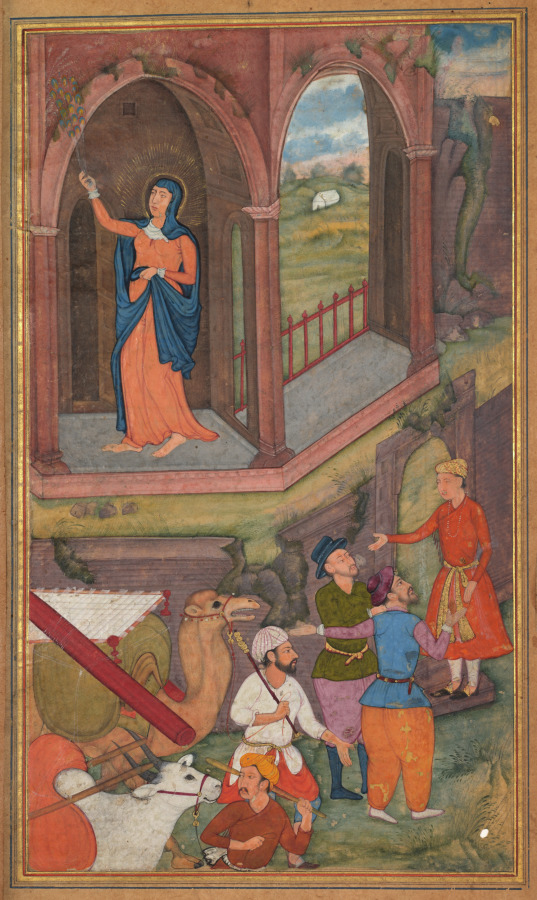
The place of Jesus’s birth (folio 25 recto), from a Mirror of Holiness (Mir’at al-quds) of Father Jerome Xavier (1602–4) is in the Cleveland Museum of Art collection.
The work and its context
The museum's open-access catalogue describes the work:
Instead of a stable, the artist has interpreted the place of Jesus’s birth as an abandoned ruin. Mary is cleaning it with a peacock-feather whisk, while Joseph negotiates with a man dressed in full Mughal attire at the doorway. The camel is laden with belongings and an Indian-style bed.
Object facts
- Title: The place of Jesus’s birth (folio 25 recto), from a Mirror of Holiness (Mir’at al-quds) of Father Jerome Xavier
- Date: 1602–4
- Culture: Mughal India, Allahabad, made for Prince Salim (1569–1627)
- Type: Manuscript
- Technique: Gum tempera, ink, and gold on paper
- Dimensions: Page: 26.3 x 15.6 cm (10 3/8 x 6 1/8 in.)
- Collection: Indian Art
- Department: Indian and Southeast Asian Art
- Accession number: 2005.145.25.b
A detail from the museum
Peacock feathers represent royalty and divine protection.
Collection credit
John L. Severance Fund
View the collection record
See the museum's photographs and full catalogue entry. Catalogue text is reproduced from the Cleveland Museum of Art's open-access data, with HTML formatting removed. This object and its supplied image are designated CC0.
Sources
More in Lifestyle
Keep reading