The Return of the Holy Family from Egypt (c. 1695–1700): Art, History and Details
The Return of the Holy Family from Egypt at the Cleveland Museum of Art: c. 1695–1700, pen and black ink, gray opaque watercolor and white heightening on prepared yellow paper. Explore the work's context, creator attribution and collection
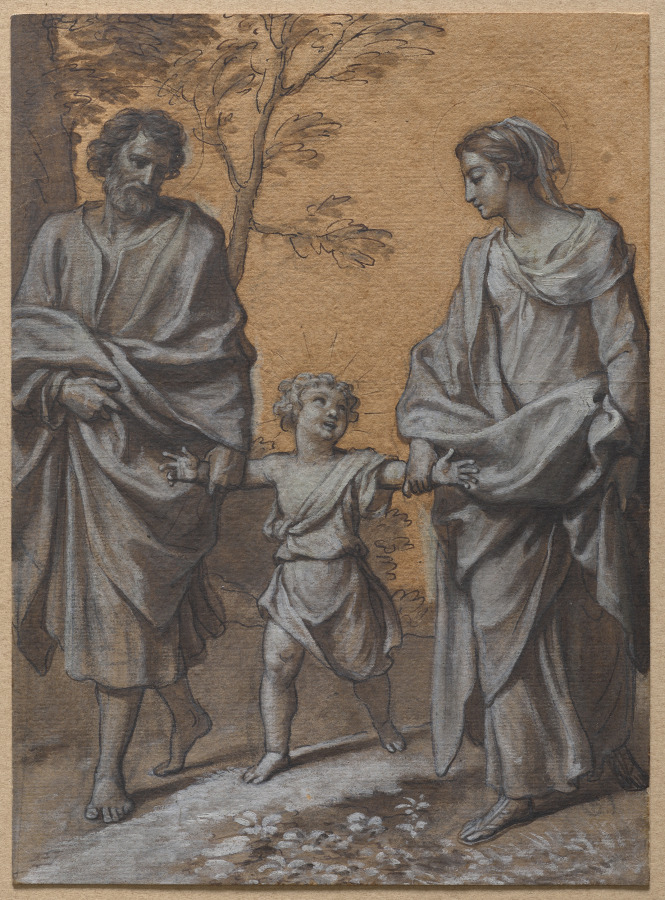
The Return of the Holy Family from Egypt (c. 1695–1700) is in the Cleveland Museum of Art collection. The museum's creator attribution is Claude Simpol (French, c. 1666–before 1711).
The work and its context
The museum's open-access catalogue describes the work:
The iconography of this drawing by the late 17th-century artist Claude Simpol is that of the Holy Family, but the exact subject is harder to identify with certainty. Due to the child’s ambiguous age, the scene is either the return of the Holy Family from the Flight into Egypt, or the return from the temple after Christ appeared among the doctors. Though loving and tender, the serious expressions and air of melancholy foreshadow Christ’s sacrifice, which is implied by the child’s arms held outstretched by his parents as if on a cross. The subtlety of emotion emphasizes the familial connection of the Holy Family and thus Christ’s humanity.
Object facts
- Title: The Return of the Holy Family from Egypt
- Date: c. 1695–1700
- Creator attribution: Claude Simpol (French, c. 1666–before 1711)
- Culture: France
- Type: Drawing
- Technique: pen and black ink, gray opaque watercolor and white heightening on prepared yellow paper
- Dimensions: Sheet: 24 x 17.3 cm (9 7/16 x 6 13/16 in.)
- Collection: DR - French
- Department: Drawings
- Accession number: 2025.6
A detail from the museum
To make this drawing, the artist employed an unusual combination of materials, consisting of grey and white opaque watercolors and ink on a yellowish prepared paper, which offsets the figures in the scene with a warm glow.
Collection credit
Mr. and Mrs. Richard W. Whitehill Art Purchase Endowment Fund
View the collection record
See the museum's photographs and full catalogue entry. Catalogue text is reproduced from the Cleveland Museum of Art's open-access data, with HTML formatting removed. This object and its supplied image are designated CC0.
Sources
More in Lifestyle
Keep reading