The Risen Christ (c. 1503–4): Art, History and Details
The Risen Christ at the Cleveland Museum of Art: c. 1503–4, engraving. Explore the work's context, creator attribution and collection history.
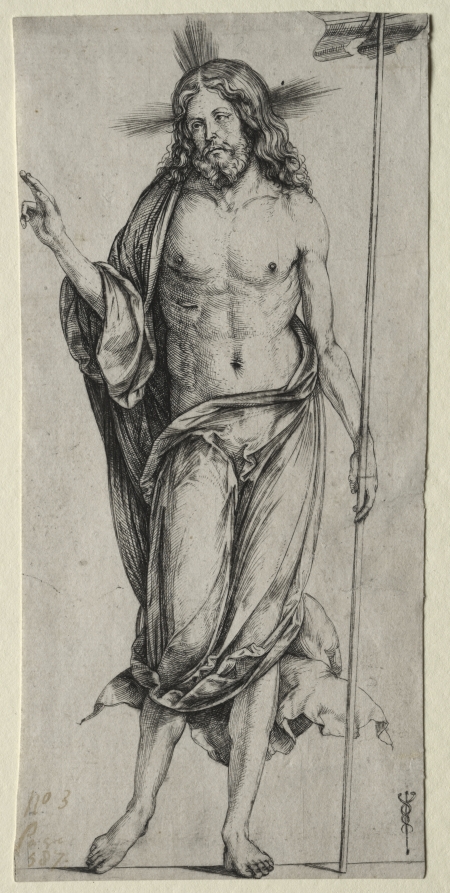
The Risen Christ (c. 1503–4) is in the Cleveland Museum of Art collection. The museum's creator attribution is Jacopo de' Barbari (Italian, c. 1460/70–c. 1516).
The work and its context
The museum's open-access catalogue describes the work:
Venetian painter and printmaker Jacopo de’ Barbari became the court artist to Emperor Maximilian I in Nuremberg, Albrecht Dürer’s hometown, around 1500. Dürer later credited De’ Barbari with awakening his interest in the study of human proportions. De’ Barbari made several engravings while in German lands, including the Risen Christ, whose dates coincide with Dürer’s Adam and Eve. The nude men that appear in both compositions suggest an exchange of ideas. Dürer’s figure of Adam features the proportions of Italian art, and De’ Barbari’s long, crossed lines punctuated with dots are similar to Dürer’s modeling technique.
Object facts
- Title: The Risen Christ
- Date: c. 1503–4
- Creator attribution: Jacopo de' Barbari (Italian, c. 1460/70–c. 1516)
- Culture: Italy
- Type: Print
- Technique: engraving
- Collection: PR - Engraving
- Department: Prints
- Accession number: 1983.11
Collection credit
Delia E. Holden Fund
View the collection record
See the museum's photographs and full catalogue entry. Catalogue text is reproduced from the Cleveland Museum of Art's open-access data, with HTML formatting removed. This object and its supplied image are designated CC0.
Sources
More in Lifestyle
Keep reading