The Seed finding Good Earth (1574): Art, History and Details
The Seed finding Good Earth at the Cleveland Museum of Art: 1574, engraving. Explore the work's context, creator attribution and collection history.
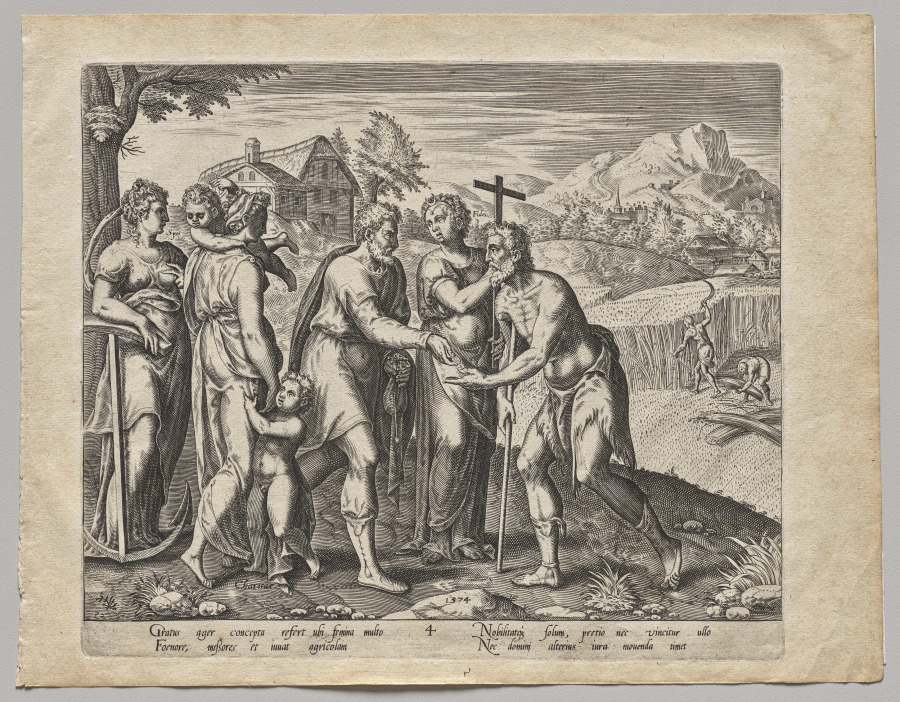
The Seed finding Good Earth (1574) is in the Cleveland Museum of Art collection. The museum's creator attribution is Philip Galle (Flemish, 1537–1612); Gerard van Groeningen (Flemish).
The work and its context
The museum's open-access catalogue describes the work:
This is one of a series of four prints portraying the biblical parable of the sower, made in Antwerp (in present-day Belgium) at the end of the 1500s. The parable compares types of soil to people in the world: one hardened; one fickle; one distracted by things of the world; and one with an open heart, ready to accept God. The last sower, depicted here, presents fertile soil for his seed resulting in the bountiful harvest seen in the background. He is accompanied by figures representing theological virtues Faith, Hope, and Charity.
Object facts
- Title: The Seed finding Good Earth
- Date: 1574
- Creator attribution: Philip Galle (Flemish, 1537–1612); Gerard van Groeningen (Flemish)
- Culture: Netherlands
- Type: Print
- Technique: engraving
- Collection: PR - Engraving
- Department: Prints
- Accession number: 2023.128.4
A detail from the museum
The sower’s prosperity due to his fertile land and heart is represented by his act of charity, providing money to a passing beggar.
Collection credit
L. E. Holden Fund
View the collection record
See the museum's photographs and full catalogue entry. Catalogue text is reproduced from the Cleveland Museum of Art's open-access data, with HTML formatting removed. This object and its supplied image are designated CC0.
Sources
More in Lifestyle
Keep reading