The Sphinx (c. 1853): Art, History and Details
The Sphinx at the Cleveland Museum of Art: c. 1853, salted paper print from waxed paper negative. Explore the work's context, creator attribution and collection history.
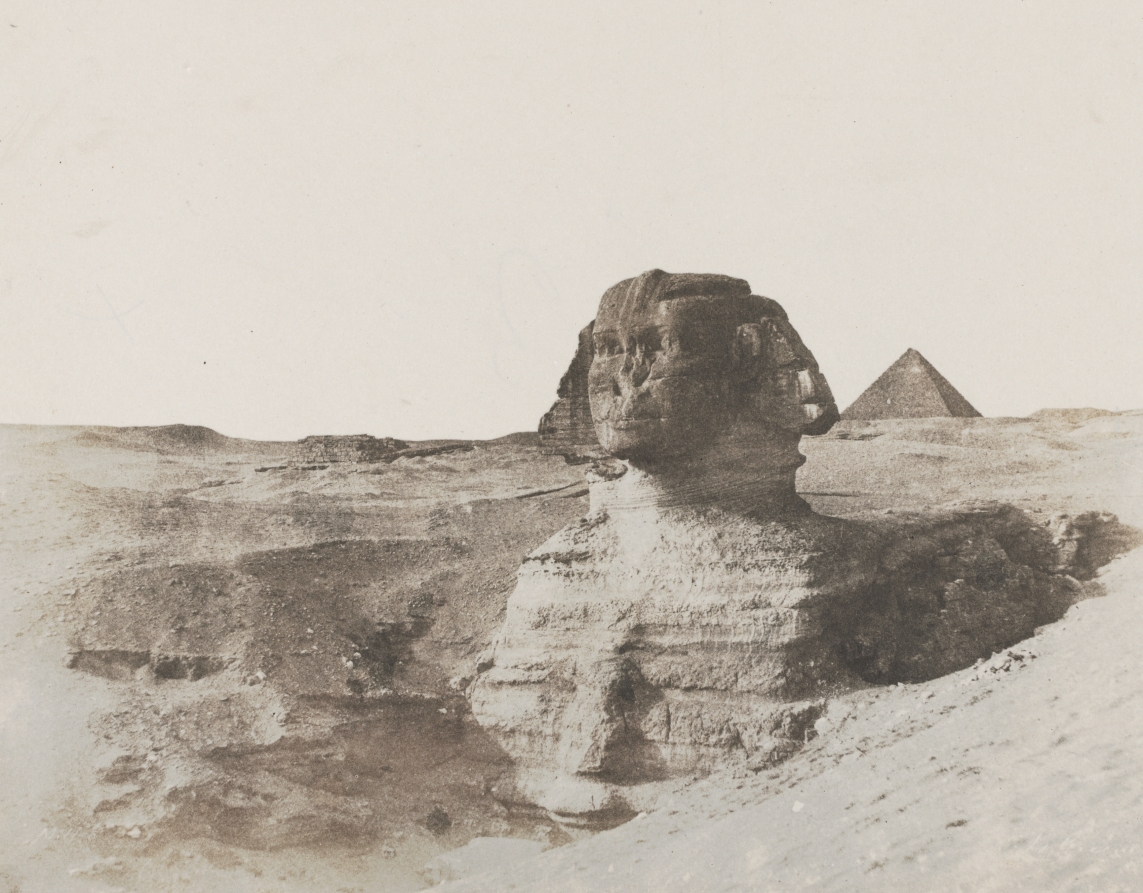
The Sphinx (c. 1853) is in the Cleveland Museum of Art collection. The museum's creator attribution is John Beasley Greene (American, 1832–1856).
The work and its context
The museum's open-access catalogue describes the work:
The son of a wealthy banker, Greene was an American but born and raised in Paris. At a young age, he became an avid archaeologist focusing on the Middle East. Before embarking on his first trip to Egypt in 1853 at age 19, he learned photography so he could accurately document excavations, discoveries, and inscriptions, but he also used the relatively new medium to produce elegant landscapes such as the view of Thebes nearby. Greene, who was involved in excavations of the Great Sphinx, died in Cairo in 1856, possibly of tuberculosis.
Object facts
- Title: The Sphinx
- Date: c. 1853
- Creator attribution: John Beasley Greene (American, 1832–1856)
- Culture: America
- Type: Photograph
- Technique: salted paper print from waxed paper negative
- Dimensions: Image: 23.2 x 29.6 cm (9 1/8 x 11 5/8 in.); Mounted: 39.8 x 56.5 cm (15 11/16 x 22 1/4 in.); Matted: 50.8 x 61 cm (20 x 24 in.)
- Collection: PH - American 19th Century
- Department: Photography
- Accession number: 2009.277
Collection credit
Norman O. Stone and Ella A. Stone Memorial Fund
View the collection record
See the museum's photographs and full catalogue entry. Catalogue text is reproduced from the Cleveland Museum of Art's open-access data, with HTML formatting removed. This object and its supplied image are designated CC0.
Sources
More in Lifestyle
Keep reading