Topknot Pin (918–1392): Art, History and Details
Topknot Pin at the Cleveland Museum of Art: 918–1392, bronze. Explore the work's context, creator attribution and collection history.
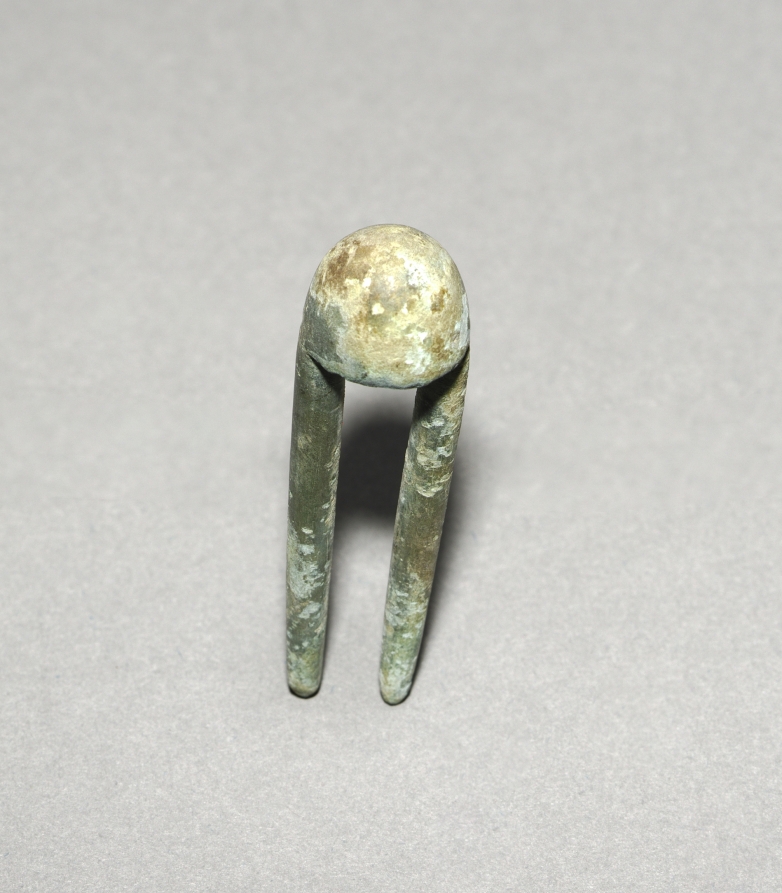
Topknot Pin (918–1392) is in the Cleveland Museum of Art collection.
The work and its context
The museum's open-access catalogue describes the work:
Metallurgy advanced remarkably in the Goryeo period (918-1392), explaining why a large quantity of sophisticated metal artifacts were used not only as daily accessories but also as burial goods. Men put their hair in a knot at the top of their heads. To keep their long hair from falling, a bronze pin such as this one was used.
Object facts
- Title: Topknot Pin
- Date: 918–1392
- Culture: Korea, Goryeo dynasty (918–1392)
- Type: Metalwork
- Technique: bronze
- Dimensions: Overall: 5.5 cm (2 3/16 in.)
- Collection: Korean Art
- Department: Korean Art
- Accession number: 1917.1028
A detail from the museum
This bronze hairpin was for a man to fix his topknot.
Collection credit
Gift of the John Huntington Art and Polytechnic Trust
Further reading listed by the museum
- Goryeo Dynasty: Korea's Age of Enlightenment, 918-1392. San Francisco: Asian Art Museum, 2003.
- The spirit of Goryeo in metalcrafts [금속공예에깃든고려인의삶]. Seoul: Jeju National Museum and National Cheongju Museum, 2011.
- Kim, Moon-ja. "A Study on the Ornaments in Goryeo Dynasty [고려 시대 장신구에 대한 연구]." Journal of Korean Traditional Costume 15, vol. 3 (December 2012): 5-21.
View the collection record
See the museum's photographs and full catalogue entry. Catalogue text is reproduced from the Cleveland Museum of Art's open-access data, with HTML formatting removed. This object and its supplied image are designated CC0.
Sources
More in Lifestyle
Keep reading