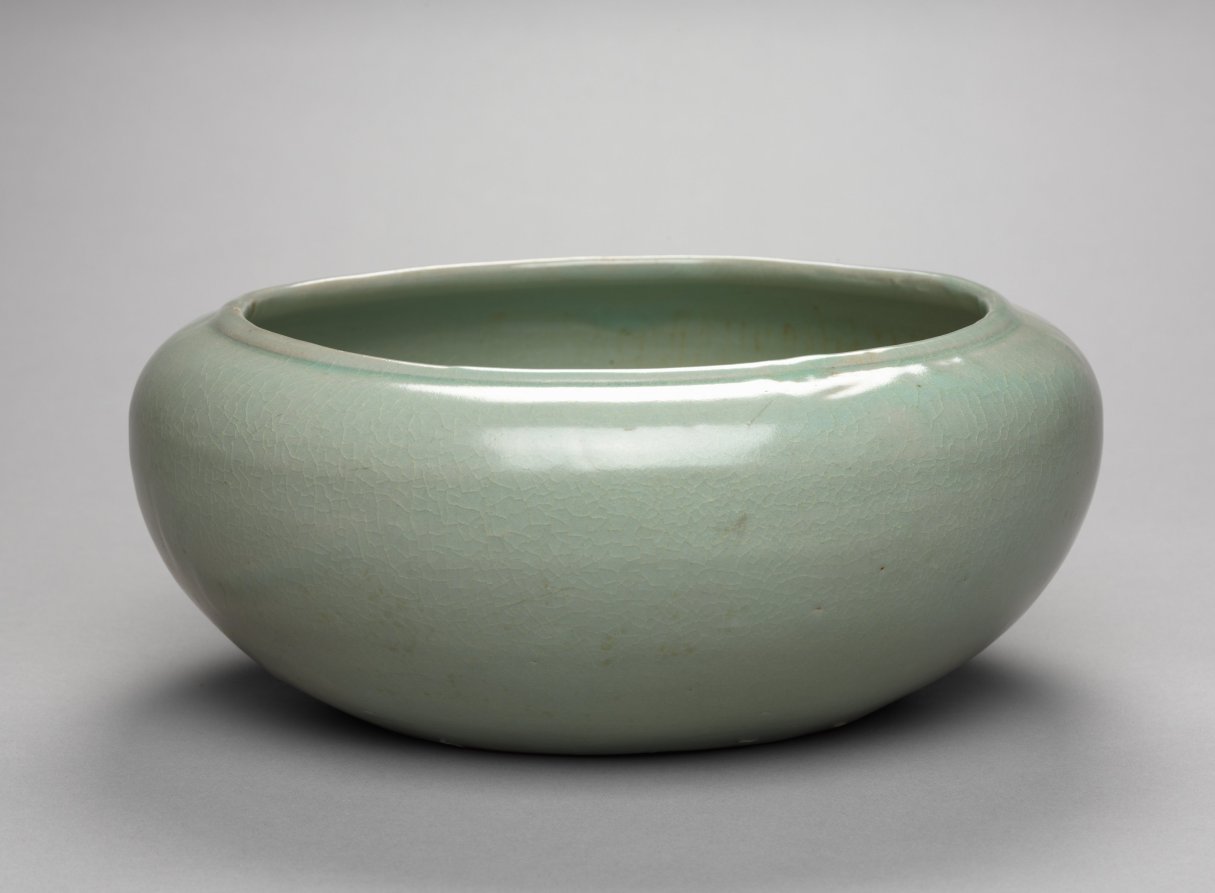
Tripod Bowl (600–1000): Art, History and Details
Tripod Bowl at the Cleveland Museum of Art: 600–1000, marble. Explore the work's context, creator attribution and collection history.
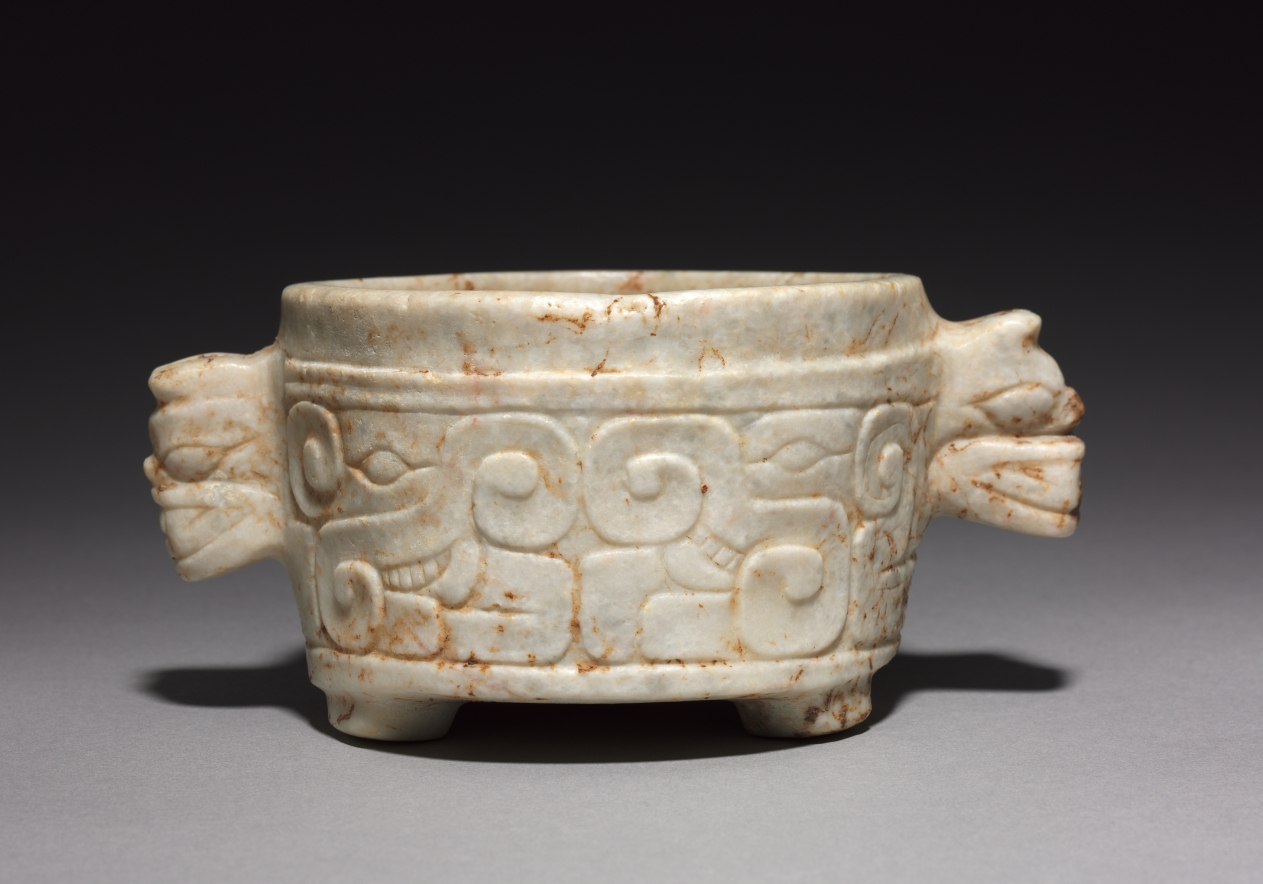
Tripod Bowl (600–1000) is in the Cleveland Museum of Art collection.
The work and its context
The museum's open-access catalogue describes the work:
Between about 600 and 800, white marble vessels carved in dense relief on their outer surfaces were a form of luxury and wealth in the Ulúa region of Honduras. Two confronting profile zoomorphic heads occur on each side of this example, between three-dimensional handles shaped as bat heads. Originally the vessel may have been covered with stucco and brightly painted.
Object facts
- Title: Tripod Bowl
- Date: 600–1000
- Culture: Honduras, Ulúa Valley, 7th-10th century
- Type: Sculpture
- Technique: marble
- Dimensions: Overall: 8.1 x 6.9 x 10.9 cm (3 3/16 x 2 11/16 x 4 5/16 in.)
- Collection: AA - Mesoamerica
- Department: Art of the Americas
- Accession number: 1990.171
A detail from the museum
One of two vessels that were the first ancient American artworks collected by James and Florence Gruener.
Collection credit
Gift of Mr. and Mrs. James C. Gruener
Further reading listed by the museum
- Stone, Doris. Masters in Marble. [New Orleans]: Dept. of Middle American Research, Tulane University, 1938.
- Young-Sánchez, Margaret. "The Gruener Collection of Pre-Columbian Art." The Bulletin of the Cleveland Museum of Art 79, no. 7 (September 1992): 234-75.
- Luke, Christina Marie. Ulúa Style Marble Vases. 2002.
View the collection record
See the museum's photographs and full catalogue entry. Catalogue text is reproduced from the Cleveland Museum of Art's open-access data, with HTML formatting removed. This object and its supplied image are designated CC0.
Sources
More in Lifestyle
Keep reading