Tripod (Ding) (1000s BCE): Art, History and Details
Tripod (Ding) at the Cleveland Museum of Art: 1000s BCE, bronze. Explore the work's context, creator attribution and collection history.
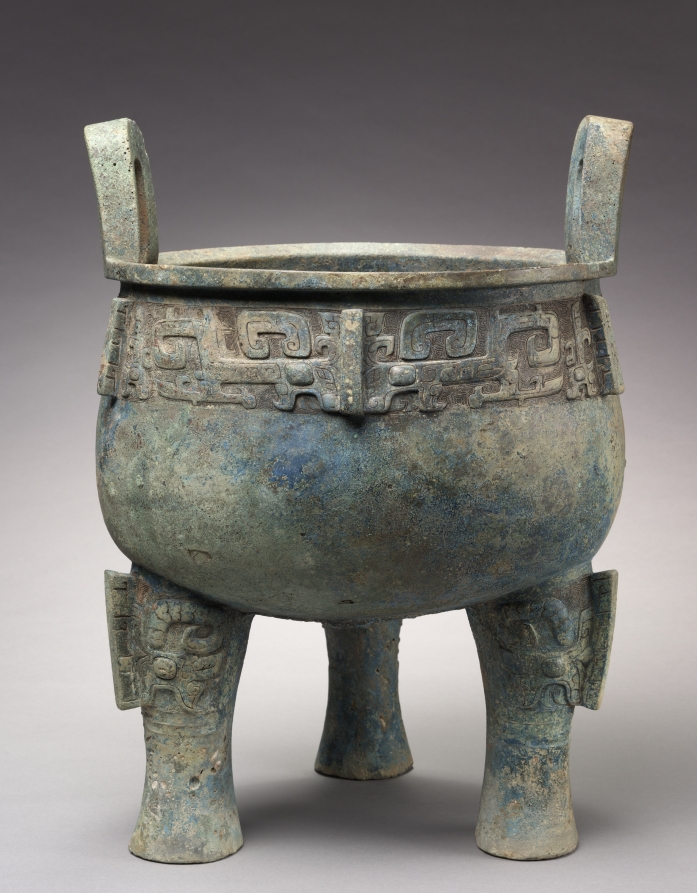
Tripod (Ding) (1000s BCE) is in the Cleveland Museum of Art collection.
The work and its context
The museum's open-access catalogue describes the work:
Large and majestic, this tripod gives the effect of overpowering force. Three animal masks (known as taotie) with coiled creatures are aligned in the decorative frieze. With the gaze of the staring eyes, the animal masks assert a religious presence and are meant to instill fear. Bold images of the ram embellish the three legs of the vessel. Bronze cauldrons (ding) like this were made for offerings of food to ancestral spirits in sacrificial and funerary rites performed by the rulers or members of the aristocracy. The ding, in particular, assumed additional significance as the symbol of political power and legitimacy. As signs of status in a stratified society, such highly valued bronzes were cast by its makers with the wish to be "forever treasured for ten thousand years, by sons' sons and grandsons' grandsons."
Object facts
- Title: Tripod (Ding)
- Date: 1000s BCE
- Culture: China, Western Zhou dynasty (c. 1046–771 BCE)
- Type: Metalwork
- Technique: bronze
- Dimensions: Overall: 57.4 cm (22 5/8 in.)
- Collection: China - Shang Dynasty
- Department: Chinese Art
- Accession number: 2003.2
A detail from the museum
Bronze tripods of the ding-type were vessels made in sets of different sizes to be used in rituals, in which grain and meat was offered to the spirits of the ancestors.
Collection credit
Severance and Greta Millikin Purchase Fund
Further reading listed by the museum
- Cleveland Museum of Art. Cleveland Art: The Cleveland Museum of Art Members Magazine. Vol. 53 no. 05, September/October 2013
- von Spee, Clarissa. "Art In New Dimensions: Chinese Miniature and Small Objects at the Cleveland Museum of Art." Arts of Asia 52, no. 4 (Winter 2022): 117–121.
View the collection record
See the museum's photographs and full catalogue entry. Catalogue text is reproduced from the Cleveland Museum of Art's open-access data, with HTML formatting removed. This object and its supplied image are designated CC0.
Sources
More in Lifestyle
Keep reading