Tripod (Ding) (c. 1250–1046 BCE): Art, History and Details
Tripod (Ding) at the Cleveland Museum of Art: c. 1250–1046 BCE, bronze. Explore the work's context, creator attribution and collection history.
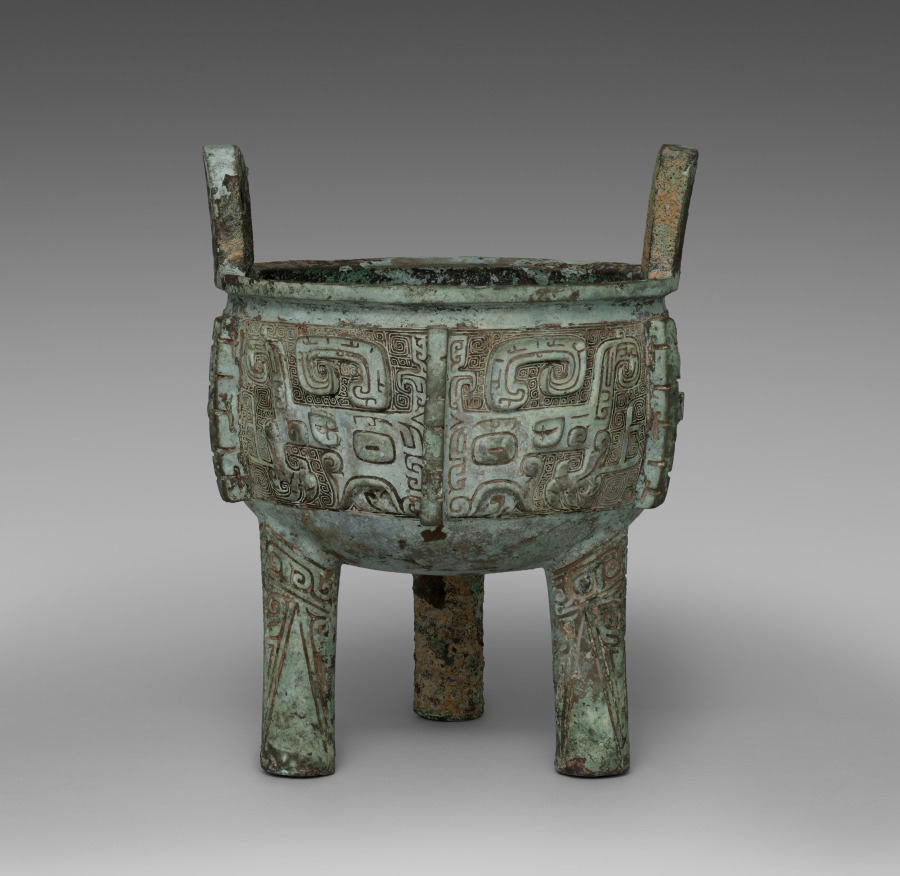
Tripod (Ding) (c. 1250–1046 BCE) is in the Cleveland Museum of Art collection.
The work and its context
The museum's open-access catalogue describes the work:
Animal images in ritual bronzes served as symbolic messengers of the supernatural realms. Among others, the animal mask called taotie emerged as the most potent symbolic form. The formidable mask emanates a powerful presence with an unforgettable stare. It expresses an overwhelming feeling of mystery, representing a transcendent, supernatural concept in ancient ritual art.
Object facts
- Title: Tripod (Ding)
- Date: c. 1250–1046 BCE
- Culture: China, Shang dynasty (c. 1600–c. 1046 BCE), Anyang phase (c. 1250–1046 BCE)
- Type: Metalwork
- Technique: bronze
- Dimensions: Overall: 24.5 x 20 cm (9 5/8 x 7 7/8 in.)
- Collection: China - Shang Dynasty
- Department: Chinese Art
- Accession number: 1962.281
Collection credit
John L. Severance Fund
Further reading listed by the museum
- Ho, Wai-Kam. “Shang and Chou Bronzes.” The Bulletin of the Cleveland Museum of Art 51, no. 7 (September 1964): 175–187.
- The Cleveland Museum of Art. Handbook of the Cleveland Museum of Art/1966. Cleveland, OH: The Cleveland Museum of Art, 1966.
- The Cleveland Museum of Art. Handbook of the Cleveland Museum of Art/1969. Cleveland, OH: The Cleveland Museum of Art, 1969.
View the collection record
See the museum's photographs and full catalogue entry. Catalogue text is reproduced from the Cleveland Museum of Art's open-access data, with HTML formatting removed. This object and its supplied image are designated CC0.
Sources
More in Lifestyle
Keep reading