Urn Figure (c. 200–500 CE (thermoluminescence date, 60 BCE–390 CE): Art, History and Details
Urn Figure at the Cleveland Museum of Art: c. 200–500 CE (thermoluminescence date, 60 BCE–390 CE, earthenware. Explore the work's context, creator attribution and collection history.
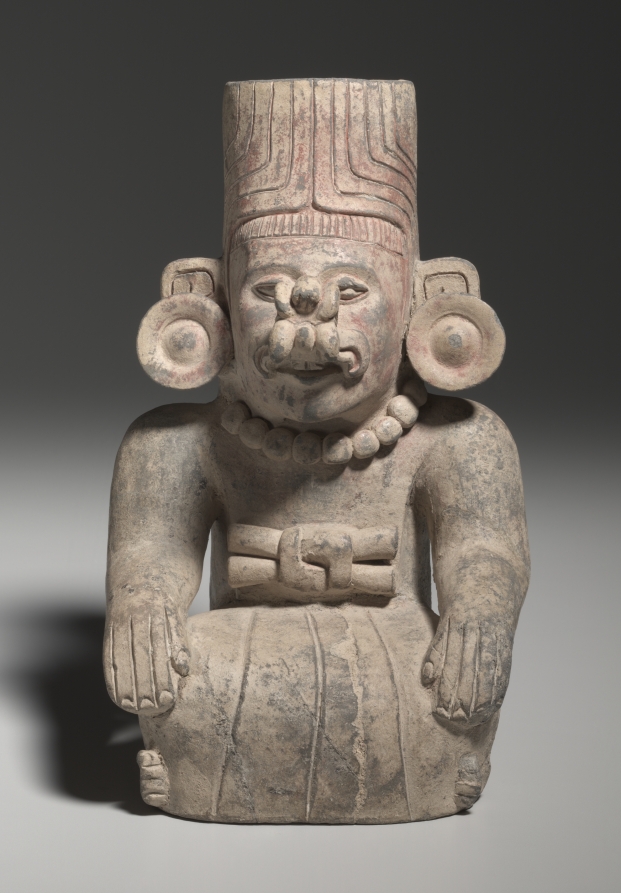
Urn Figure (c. 200–500 CE (thermoluminescence date, 60 BCE–390 CE) is in the Cleveland Museum of Art collection.
The work and its context
The museum's open-access catalogue describes the work:
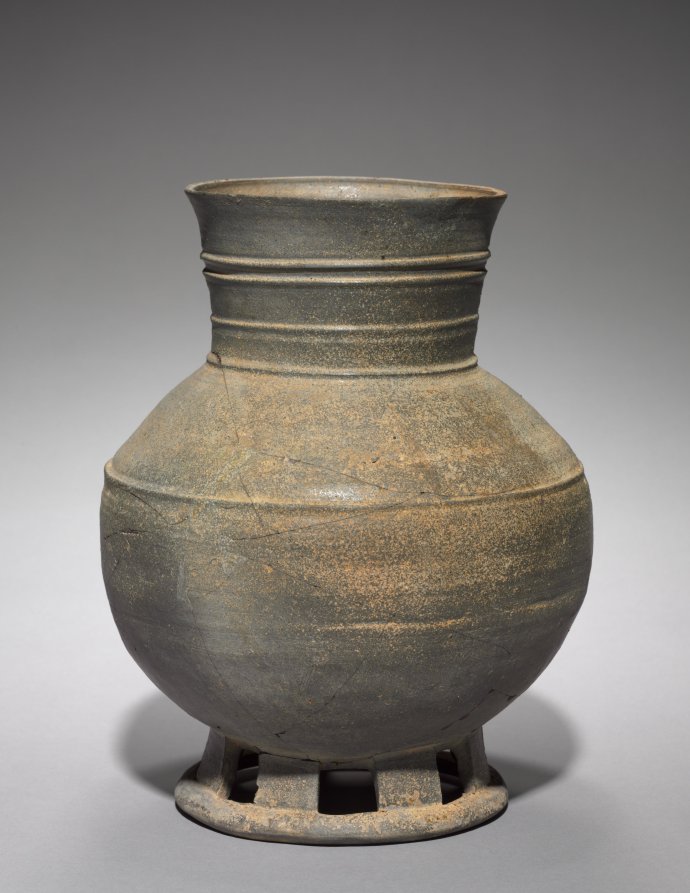
The figure projecting from the front of a cylindrical container wears a mouth mask perhaps shaped as a serpent’s fanged upper jaw. It probably served in a tomb as a companion to a larger, more complex figural urn. Though termed "urns," these ceramics do not contain the cremated ashes of the dead but usually are found empty.
Object facts
- Title: Urn Figure
- Date: c. 200–500 CE (thermoluminescence date, 60 BCE–390 CE
- Culture: Mexico, Oaxaca, Zapotec
- Type: Sculpture
- Technique: earthenware
- Dimensions: Overall: 26.1 x 16.3 x 16.3 cm (10 1/4 x 6 7/16 x 6 7/16 in.)
- Collection: AA - Mesoamerica
- Department: Art of the Americas
- Accession number: 1990.277
Collection credit
Gift of Mr. and Mrs. James C. Gruener
Further reading listed by the museum
- Young-Sánchez, Margaret. "The Gruener Collection of Pre-Columbian Art." The Bulletin of the Cleveland Museum of Art 79, no. 7 (1992): 234-75.
View the collection record
See the museum's photographs and full catalogue entry. Catalogue text is reproduced from the Cleveland Museum of Art's open-access data, with HTML formatting removed. This object and its supplied image are designated CC0.
Sources
More in Lifestyle
Keep reading