Vaishnava Devotee with Two Women (c. 1890): Art, History and Details
Vaishnava Devotee with Two Women at the Cleveland Museum of Art: c. 1890, Gum tempera, graphite, ink, and tin on paper. Explore the work's context, creator attribution and collection history.
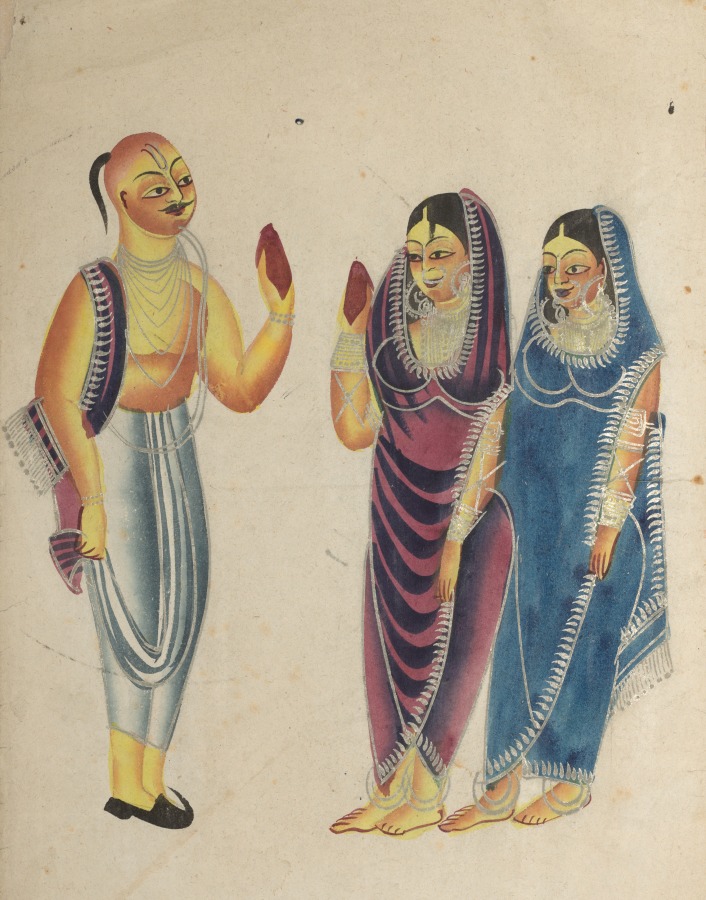
Vaishnava Devotee with Two Women (c. 1890) is in the Cleveland Museum of Art collection.
The work and its context
The museum's open-access catalogue describes the work:
Here a devotee of Vishnu is wearing shoes and is depicted with some irony as being a fashionable devotee, or perhaps merely posing as orthodox. Kalighat artists often targeted hypocritical Vaishnava mendicants whose intentions with unsuspecting women were far from innocent. On his forehead one finds sectarian marks worn by worshippers of Vishnu. The man’s right hand and one of the women’s left hands, both held aloft, are colored red, possibly to indicate that they were adorned with henna.
Object facts
- Title: Vaishnava Devotee with Two Women
- Date: c. 1890
- Culture: Eastern India, Bengal, Kolkata, Kalighat
- Type: Painting
- Technique: Gum tempera, graphite, ink, and tin on paper
- Dimensions: Painting only: 45.4 x 27.8 cm (17 7/8 x 10 15/16 in.)
- Collection: Indian Art
- Department: Indian and Southeast Asian Art
- Accession number: 2003.101
Collection credit
Gift of William E. Ward in memory of his wife, Evelyn Svec Ward
View the collection record
See the museum's photographs and full catalogue entry. Catalogue text is reproduced from the Cleveland Museum of Art's open-access data, with HTML formatting removed. This object and its supplied image are designated CC0.
Sources
More in Lifestyle
Keep reading