Vase (c. 3000–2500 BCE): Art, History and Details
Vase at the Cleveland Museum of Art: c. 3000–2500 BCE, earthenware with slip coating and painted decoration. Explore the work's context, creator attribution and collection history.
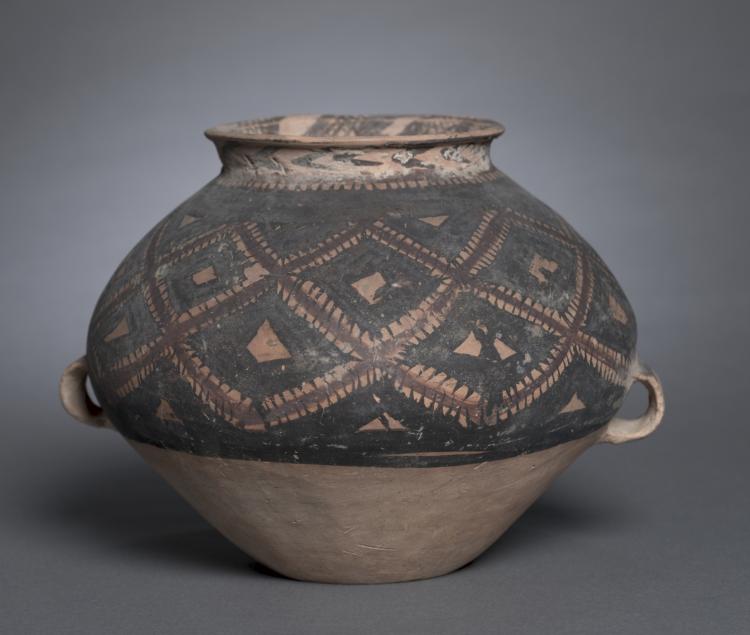
Vase (c. 3000–2500 BCE) is in the Cleveland Museum of Art collection.
The work and its context
The museum's open-access catalogue describes the work:
This Neolithic Chinese vessel has an ovoid body with two handles. Its neck is short and splays outward into a wide opening. It is decorated with a continuous lozenge motif. The material is a fine, reddish-buff clay slightly polished and then painted in black and red.
Object facts
- Title: Vase
- Date: c. 3000–2500 BCE
- Culture: China, Gansu province, Neolithic period
- Type: Ceramic
- Technique: earthenware with slip coating and painted decoration
- Dimensions: Diameter of mouth: 14 cm (5 1/2 in.); Overall: 20.4 cm (8 1/16 in.)
- Collection: China - Neolithic
- Department: Chinese Art
- Accession number: 1930.333
Collection credit
Charles W. Harkness Endowment Fund
Further reading listed by the museum
- "Two Chinese Neolithic Vessels." The Bulletin of the Cleveland Museum of Art 18, no. 7 (July 1931): 148–149.
View the collection record
See the museum's photographs and full catalogue entry. Catalogue text is reproduced from the Cleveland Museum of Art's open-access data, with HTML formatting removed. This object and its supplied image are designated CC0.
Sources
More in Lifestyle
Keep reading