Vesperbild (Pietà) (c. 1420): Art, History and Details
Vesperbild (Pietà) at the Cleveland Museum of Art: c. 1420, painted cast stone. Explore the work's context, creator attribution and collection history.
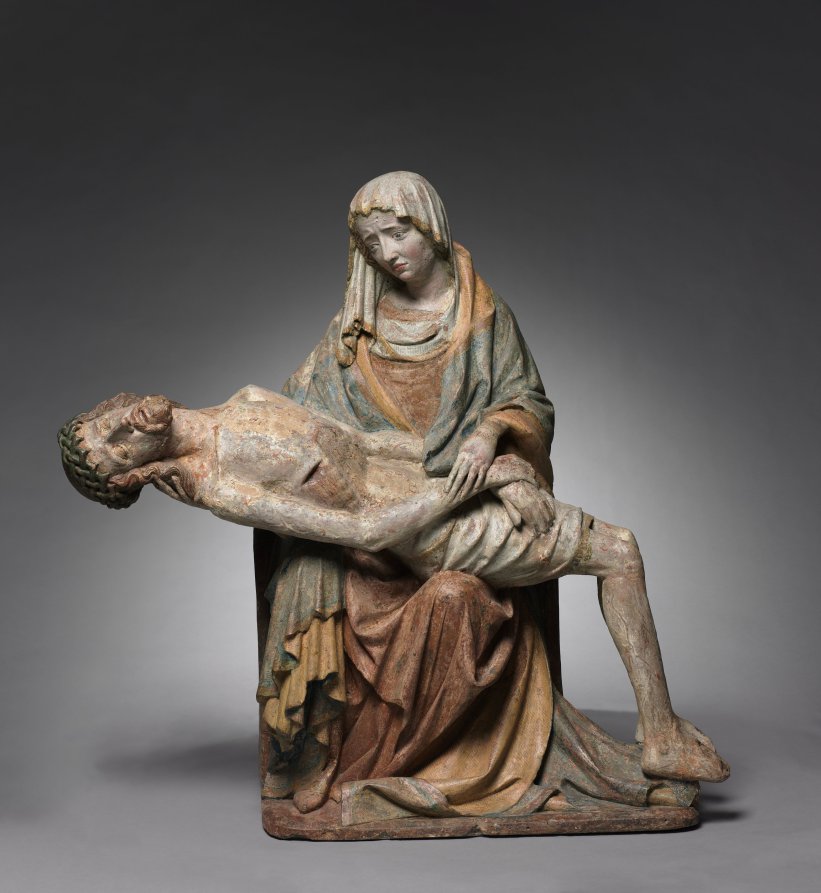
Vesperbild (Pietà) (c. 1420) is in the Cleveland Museum of Art collection. The museum's creator attribution is Master of Grosslobming (Austrian).
The work and its context
The museum's open-access catalogue describes the work:
The word vesperbild is the German word for pietà, the image of the Virgin Mary cradling her dead son on her lap. The theme has no literary source; it originated in Germany during the early 1300s and was more widespread in central Europe than in Italy. These devotional sculptures were used within the interior of a church, in small side chapels dedicated to the Virgin. As in this example, they often convey her grief in a sensitive way. For those who prayed before them, vesperbilds were poignant reminders of the Passion of Christ and the suffering of the Virgin.
Object facts
- Title: Vesperbild (Pietà)
- Date: c. 1420
- Creator attribution: Master of Grosslobming (Austrian)
- Culture: Austria, Steiermark, 15th century
- Type: Sculpture
- Technique: painted cast stone
- Dimensions: Overall: 94 x 92.7 x 39.4 cm (37 x 36 1/2 x 15 1/2 in.)
- Collection: MED - Gothic
- Department: Medieval Art
- Accession number: 1971.67
Collection credit
Purchase from the J. H. Wade Fund
Further reading listed by the museum
- The Cleveland Museum of Art. Handbook of the Cleveland Museum of Art/1978. Cleveland, OH: The Cleveland Museum of Art, 1978.
View the collection record
See the museum's photographs and full catalogue entry. Catalogue text is reproduced from the Cleveland Museum of Art's open-access data, with HTML formatting removed. This object and its supplied image are designated CC0.
Sources
More in Lifestyle
Keep reading