Aphrodite (400–200 BCE): Art, History and Details
Aphrodite at the Cleveland Museum of Art: 400–200 BCE, terracotta. Explore the work's context, creator attribution and collection history.
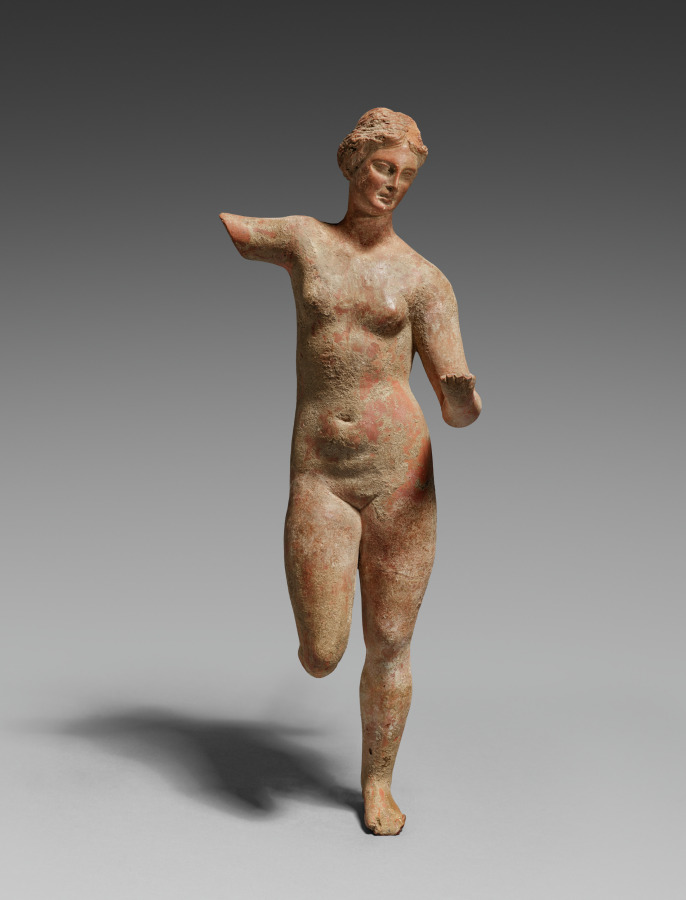
Aphrodite (400–200 BCE) is in the Cleveland Museum of Art collection.
The work and its context
The museum's open-access catalogue describes the work:
This nude figurine was likely inspired by the Aphrodite of Knidos by Praxiteles, a work that spawned countless reproductions of varying sizes in different media. Created from inexpensive terra cotta clay, this Aphrodite might have been commissioned as a votive offering by a person of modest means.
Object facts
- Title: Aphrodite
- Date: 400–200 BCE
- Culture: Greece
- Type: Sculpture
- Technique: terracotta
- Dimensions: Overall: 43.5 cm (17 1/8 in.)
- Collection: GR - Greek
- Department: Greek and Roman Art
- Accession number: 1927.489
A detail from the museum
This Aphrodite may be admiring her reflection in a mirror once held in her left hand.
Collection credit
Gift of the John Huntington Art and Polytechnic Trust
Further reading listed by the museum
- R. H. “A Figurine of Aphrodite.” The Bulletin of the Cleveland Museum of Art 14, no. 7 (1927): 120–27.
- The Cleveland Museum of Art. Handbook of the Cleveland Museum of Art. Cleveland, OH: The Cleveland Museum of Art, 1928.
- Doshi, Saryu. India and Greece, Connections and Parallels. Bombay: Marg Publications, 1985.
View the collection record
See the museum's photographs and full catalogue entry. Catalogue text is reproduced from the Cleveland Museum of Art's open-access data, with HTML formatting removed. This object and its supplied image are designated CC0.
Sources
More in Lifestyle
Keep reading