Aureus (Coin) Portraying Emperor Otho (69 (January-April), issued by Otho): Artwork and History
Aureus (Coin) Portraying Emperor Otho at the Art Institute of Chicago: date, artist attribution, materials and the museum's explanation of the work.

Aureus (Coin) Portraying Emperor Otho (69 (January-April), issued by Otho) is in the Art Institute of Chicago collection. The museum lists its creator attribution as Roman; minted in Rome.
The work and its context
The Art Institute of Chicago describes the work:
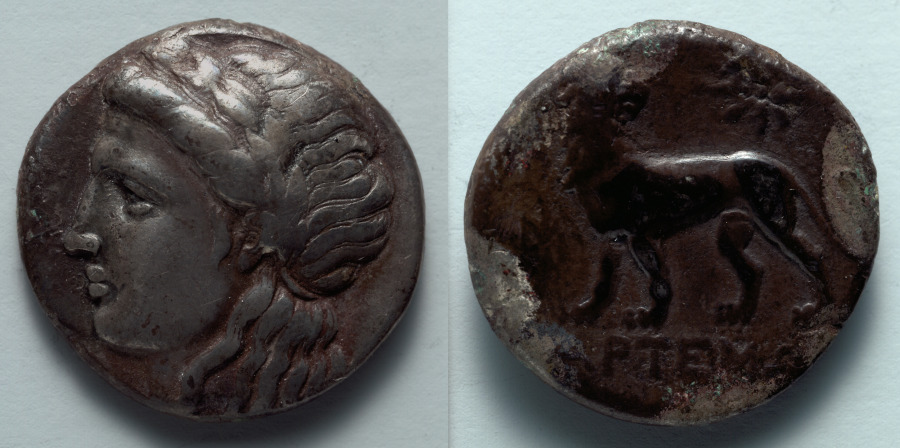
Portraits of important people appear on local currency all around the world. The same was true in ancient Rome, which began producing its first coinage in the late 4th century BC. Early coins depicted the heads of gods and goddesses on the front side, often in profile, while the back depicted animals, natural resources, symbols, and references to historical events. It was not until 44 BC that the portrait of a living person—Julius Caesar—appeared on coins. Thereafter, profile portraits of rulers or other members of the imperial family became the standard subject on coins throughout the Roman Empire. Inscriptions on coins help identify the ruler. While the front side depicted the sovereign’s portrait, the back was often used to communicate the ruler’s accomplishments or aspirations. Until Late Antiquity, portraits usually appeared in profile. The tiny images were carved by engravers into bronze dies, with one for the front and another for the back. The coins were then struck, one by one, in a process similar to how coins are created today. Roman emperor Nero killed himself in 68, bringing an end to his chaotic reign. What followed was an equally chaotic struggle over who would succeed him. The year 69 saw one general after another rule and die in quick succession: Galba (reigned June 68–Jan. 69), Otho (reigned Jan.–Apr. 69), Vitellius (reigned Apr.–Dec. 69), and finally Vespasian (reigned 69–79), who founded the Flavian dynasty that ruled until 96. The harsh character of these four emperors is emphasized by the realistic features of their coin portraits—the hooked nose of Galba, the double chin and vain curls of Otho (seen in this coin), the plump features of the gluttonous Vitellius, and the lined complexion of battle-hardened Vespasian. The front (obverse) of this coin portrays the head of Emperor Otho to the right, bare. On the back (reverse) is Securitas standing to the left, with a wreath in right hand, scepter in left.
Object facts
- Title: Aureus (Coin) Portraying Emperor Otho
- Date: 69 (January-April), issued by Otho
- Artist attribution: Roman; minted in Rome
- Place of origin: Rome
- Medium: Gold
- Dimensions: Diam.: 1.9 cm (3/4 in.)
- Type: Coin
- Department: Arts of Greece, Rome, and Byzantium
- Reference number: 1922.4865
Collection credit
Gift of Martin A. Ryerson
View the original
Explore the artwork in the Art Institute's collection, including its image and the museum's current catalogue details.
The description above is credited to the Art Institute of Chicago and reused under Creative Commons Attribution 4.0; HTML formatting has been converted to plain text. Other catalogue metadata and the public-domain image are provided under CC0 1.0.
Sources
More in Lifestyle
Keep reading